Why Celebrate?
Worldbuild Wednesday ep. 36
I see festivals used in story beats across fiction, beautiful scenes full of sights, sounds, and emotion. Untimely many feel disconnected with the story, and the world around them. In contrast there are celebrations that in fiction that feel real, feel connected to the characters and the story itself. The separation isn’t accidental, it’s the worldbuilding. In real life festivals shape cultures, preserve traditions, and hold power. When built properly the fictional festivals can carry the same weight in their world; they don’t decorate a plot they transform it.
How many stories have you read where there’s a festival of any description, could be a harvest festival, Christmas analog, or something ‘unique to this place’ that doesn’t feel right? It may be the familiar montage, it may be the emotional stakes surrounding it, it could be that the festival feels alien to the culture the audience has experienced so far. I don’t want to read though another hallow festival when the author thinks it will carry stakes.
Think of the summer festival that appears, no forshadowing, no build up just appears. Sure it could be that we are following a blackhole of a male lead, and I’m sure a few writers, and more readers will make that argument; since: “that scene where they were searching each other though the crowds and then embrace with a kiss as the fireworks start was so moving!” I’ve seen that comment, I suspect those who frequent comment sections have seen it too. As you’re here I presume you’re realizing that wasn’t a festival that was a set piece.
Who doesn’t love a good set piece?
The issue isn’t the set piece it’s that it is only a set piece.
What if it was more than just a set piece? Since my example implies a romance, let me sketch out a college one. We start in late September and following our leading lady getting slightly overwhelmed by both the college experience and her ‘mentor’ the talk, dark, handsome, and rather obvious romantic interest. Her roommate lets her know that A) She has to find which Halloween party he’s going to, and B) they need to figure out if he has a date to the Autumn Ball. This ball perhaps is more fitting for a noble fantasy story, is something this college does. It is one of the ‘romance checkpoints’. Ladies if he doesn’t ask you to the Autumn Ball either try harder to get his attention or he’s not interested. Thus every major plot point starts foreshadowing the Autumn Ball. As the Halloween parties come up the professors warn, “If you get arrested, even if it’s just because you were scooped up at a party, and the charges dropped. You will be barred from this year’s Autumn Ball.” After managing to blunder into a couples costume, because romance story; she’s then dragged off to ballroom dance lessons, and forced into somewhat impractical ball gowns. Obviously her first dress color is forbidden by the ancient magics (the old convoluted mathematical system when this started in 1874).
Now this example of an Autumn ball wouldn’t have come from no where, thus even as an example I’ve done a bit of layering. Most things in reality and the well built world have to be layered, with history on top of tradition on top of history. I outlined this previously, in both Shoulders of Giants and History Dilatation. To build a degree of depth I have created four starting questions: What is being celebrated? When and where does it take place? How is it celebrated (and what does that mean)? What is the history of the festival or celebration?
What is being celebrated is fairly straight forward, what, or who is the core of this celebration? Is it a religious event, a historical event, a seasonal event, or something more exotic? Religious events are perhaps the easiest to draw from, followed by historical. Any holiday calendar will have some religious: Easter, Christmas, and some historical: 4th of July, Memorial day. Seasonal is something we don’t see too much on Earth anymore, the oft over used harvest festivals and summer festivals would fall in here, with Mayday celebrations being a good place to find a historical backing. Then there are the exotic, where it doesn’t fall into the historical or religious but is still worth celebrating, rare but possible so keep an open mind.
When and where does it take place is also fairly obvious. What day or days of the year, and where do people celebrate? It could be a week long festival where people are generally in the streets, dancing, singing, drinking for general merriment’s sake. It could be a quiet celebration where everyone sequesters into their own home for a day. Regardless of the specifics location and time will shape the holiday, weather it’s a single meal or a fortnight of gallivanting.
How it is celebrated, and what is the meaning behind said celebration becomes tricky. Often this is what can set a pure set piece from something more meaningful to both the story, and the audience. If one has a quiet celebration where people exchange gifts, are there some traditional gifts that have meaning behind them? If so what are those meanings? If it’s a party why is it a party? The entire town comes out for feasting and dancing, there has to be a story behind why. When there isn’t the note doesn’t ring true.
Lastly we come to the history of the festival. While listed last, it is the keystone that supports the entire structure. Most holidays on Earth have a century of history. With very few noted exceptions, festivals and celebrations are old. Because of their age things have built up, each layer building on the next until we reach today when we lay down our own layers. I know I use history like a ‘secret ingredient’, yet when it comes to festivals or celebrations it is. Having a reason behind each of the elements listed above and an age for each of those answers can solidify what is important and in the cultural memory with each of these events.
After, or often during, answering these questions the pieces should start to fall together and the festival will change from, “here’s the festival to produce these scenes” to a part of the world which characters can interact with. How the characters interact with said festival or celebration will be the core to selling it when it comes down to plot out the story. If say a character had wonderful Thanksgivings where everyone gathered at Grandma’s house then a drunk driver killed Grandma ending Thanksgiving that is a powerful story to pull from. The emotions, across the years added together and then applied to this Thanksgiving. It then will change how that character interacts with others because “Thanksgiving doesn’t really matter” which obviously offends the love interest. This could be a situation where a character shows off a new side of themselves because of the festival. For example what if the quiet, nerdy tomboy turns into the biggest Christmas Elf. Outfit changes, personality gets turned on its head no longer is she the quiet wall flower in over-sized ‘ignore me’ clothing she is a pop of green and red bursting with joy, and tossing cookies around, “Because, it’s Christmas”. Obviously there’s a story from the first and for the latter. Which then adds depth to the characters and the festival as we now see it though the characters. Tapping in my Autumn ball, maybe our ginger go-geter of a leading lady tiptoes though the buildup, as she realizes she’s along for the ride and that lack of control, familiarity, and knowledge reveals her insecurities, and possibly a case of impostor syndrome. Her admitting she may be dragged along with out a date turns our tall dark and handsome mentor into her prince charming, if only for the night. While on the dance floor he admits he hasn’t gone before, as he’s been shot down every woman before.
As captivating and important characters are one must not to not get sucked into the leads. Often the greater cultural fabric will impact the plot as much as any one character. Maybe people get more talkative as there’s now something positive to talk about, or because everyone is focused on the lunar new year and the fact it’s send the singletons to go find their spouse topics that generally don’t get talked bout or pushed are getting pushed. Maybe there are two rival families in town that put on summer pageants and the whole town wants to see what these two clans will get up to this year. The specific possibilities are endless, but if the rest of the world doesn’t feel like they are tied into this festival as much as the characters it will fall flat.
Remember my Autumn ball from earlier, everything leading up to it will touch it. Professors giving home work assignments, or setting test and quiz dates so that that night is clear for the ball. If we presume it’s a college town maybe that ball has spilled over and the town makes a weekend of it. With the town throwing their own ball the following night on the Saturday and it’s a weekend of festivities. Meaning when our leading lady head off campus to go shopping even the clerks and assistants know, and are excited for this event.
Why one should do it this way becomes fairly obvious. It builds investment and belief in the world, it shows off the cultural norms, and it can trigger plot events. For example: the harvest festival is coming and is a big thing, everyone is functionally forcing it into conversations, the character is worried about which girl he will ask and if he will get rejected, his best friend just took the obvious pick. It builds up stakes, it shows off character, and when things go wrong or right there is an emotional payoff. The character’s stumbles or successes start to resonate. On the larger cultural side it highlights what is or isn’t normal, what is or isn’t expected, and to a degree who the players are within the society. All of those add to the immersion of the characters in the culture and by extension the audience in the culture. Which is how we prevent the festival or celebration from feeling hallow.
By taking the time to ask, what is being celebrated, when and where it is celebrated, how it is celebrated then layer on the history. Any festival will transform from a set piece to a part of the world and the culture. A part of the world that builds the foundation of the story and belief in the world. As characters navigate though the festival, its customs, any responsibilities, and the emotions tied up in all of it the audience realizes this is something they should get invested in as well. Which raises the stakes, and creates a better story.
With that I will see you Friday for Magic Fueled Festivals and next week when I dive into how the celebrants change a festival.
Mentioned past articles
 Grathew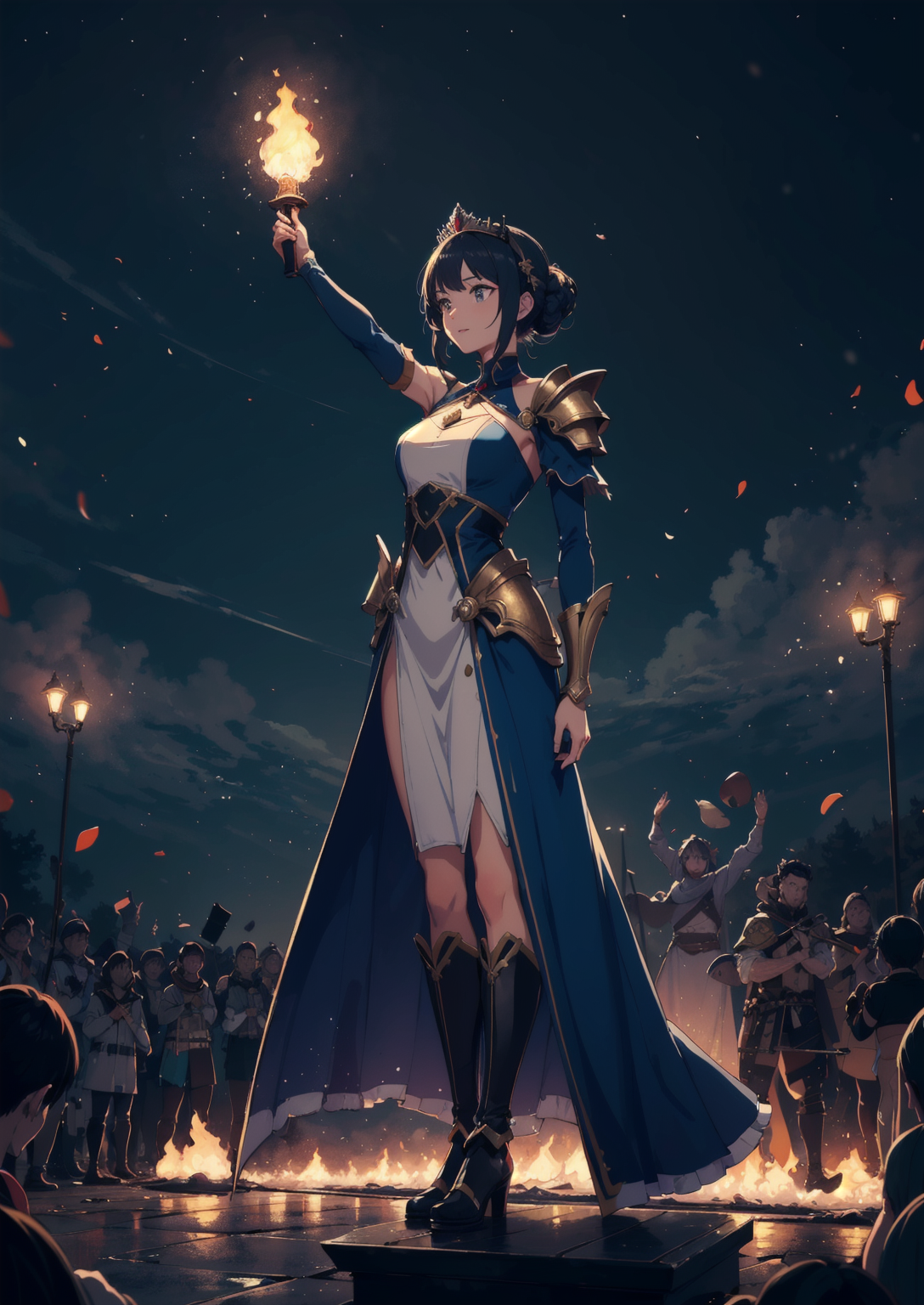
 Grathew
Hello all and thanks for starting off the year with me. I have got a lot already for paid subscribers early access (I promise I won’t shill it too hard going forward). I think this is one of my best pieces to date and hope you enjoyed it. I look forward to spending this year worldbuilding with you.
If you think I’ve earned it.