Who Knows?
Worldbuild Wednesday ep. 19

One of the biggest problems I find with most people’s worldbuilding is character knowledge. This works either as characters knowing things or not knowing things they should. Thus this week I want to dig into it.
Yes there will be overlap with a previous week, specifically Educating the Populace from January. Yet there is an important difference between the system and character knowledge. That all said I will link the previous below in case you missed it.
 Grathew

That out of the way let us continue on; an example this done right comes from Harry Potter, where Ron askes Harry, and Hermione, about The Tales of Beedle the Bard. Something the two have no knowledge of as they grew up outside of the wizarding world. This is a text book example of character knowledge lining up with the world. The born and bred wizard knows more about the wizarding world than the two outsiders. Yet even with this example of doing it right, there is a problem. After seven years of school within the wizarding world no one, ever mentioned the childhood book. While I’m sure not everyone talks about their favorite childhood fairy tails every day. With a school the size of Hogwarts, and the amount of time someone should have said something.
This highlights one of the aspects of knowledge: commonality. I put it into five levels of knowledge: Common, Uncommon, Hobbyist, Specialist, Expert. Common Knowledge, should be self explanatory if most know something put it here. Uncommon Knowledge is a bit more complicated. It isn’t hidden, or something you’d have to go looking for, yet not something that is laying around. I like to think of it as ‘holiday decorations’ of knowledge. For most holiday decorations aren’t left out all year round yet if you ask where are the holiday decorations people know what and where they are. Hobbyist is a bit more in depth. This is when the requirement that a character has an interest in the topic comes into play. In all honestly from this point on any character that would know these things would probably have an interest in them. Specialist takes interest and adds study, or training. Expert is the least well known and most specialized knowledge. This categorizing of the information allows for more consistent usage of who knows what, and understanding where knowledge gaps should be.
Knowledge gaps are probably the most important part of a character’s knowledge, gaps that should draw from their culture and education. Which is why they are apart of worldbuilding. Since every has knowledge gaps, simply think about what it is you don’t know, or more practically the areas you know you don’t know much about. Not all of these these gaps are personal, some are societal. This typically comes from what a society sees as unimportant. Let’s take the Pacific portion of WWII to build the example. How many people are a ware of USS Robin? USS Robin also known as HMS Victorious was lent to the US Pacific fleet to reinforce as USS Saratoga was the only undamaged carrier at the time. HMS Victorious did a little bit, backing up Saratoga during Operation Cartwheel, and some ASW sweeps. However it wasn’t very long nor was there much naval warfare thus this very interesting exchange is often forgotten.
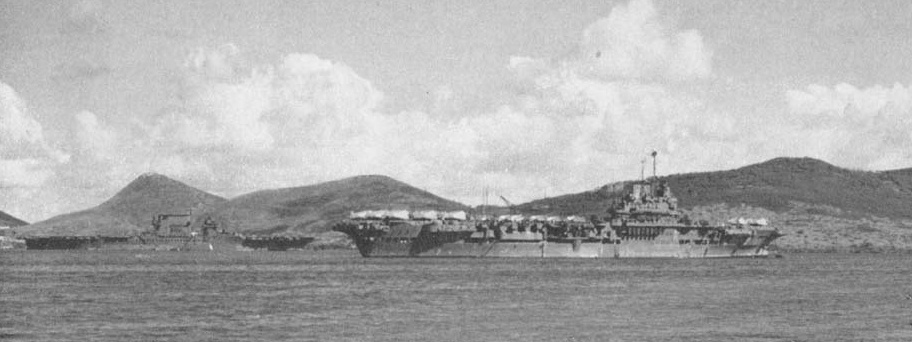
This could have been one of the key events in the Pacific. With Saratoga being fully operational, and Enterprise was damaged but still fighting as she did, if the Japanese pushed it’s likely that we could have lost one or both carriers. Thus the need to borrow Victorious. Yet the Imperial Japanese Navy was recovering for the few months Victorious was in US service, meaning Victorious got a vacation in the South Pacific before being relieved by the first Essex and Independence class carriers. Thus the service of HMS Victorious is often ignored by history. Another example would be the battles between the Royal Navy and the Imperial Japanese Navy in the Indian Ocean or the British invasion of Madagascar in 1942. Yet I digress.
Thinking about what things a culture would want to forget or wouldn’t find a reason to keep front and center. Those are the bits that are going to get elevated up the knowledge levels. What may have been common, would be come uncommon, and further. As it doesn’t get passed down as often and people either forget or die. This filtering of information is a fairly natural process as things fade out of focus and eventually get buried by the sands of time. By doing this one can provide interesting anecdotes from the past that can allude to the hidden history.
The last thing to keep in mind is how knowledge is shared. If one has stories that have months of skipped down time, or skip the down time between the books, don’t forget that people will pick things up. Hopefully not plot important things, but things none the less. If a character was an outsider to a culture they may pick up some folk stories, or common knowledge along the way. Yet the outsider has an advantage, a different set of blind spots. To continue using WWII as the example, think about the differences between how it is taught in history classes in the various countries. How does Italy’s education differ from France’s? Russia is famous for calling it the Great Patriotic War and largely ignoring everything Russia wasn’t directly involved with. Meaning if a Russian came to the states they likely wouldn’t know much about the Pacific, but would know much more about the Eastern European front.
When it comes to using this in a story, it should be fairly obvious. Knowing who knows what and why gives the characters more different ways to interact with the story. It can highlight backstories, show differing opinions, and give more character to the characters. Not to mention more depth to the world though the characters.
With that I will leave you for next week.
For those of you at the bottom bottom here I apologize for last week I went to a convention and ended up not able to finish this in the rush to get ready.