When the Game Sucks You in
Worldbuild Wednesday ep. 29
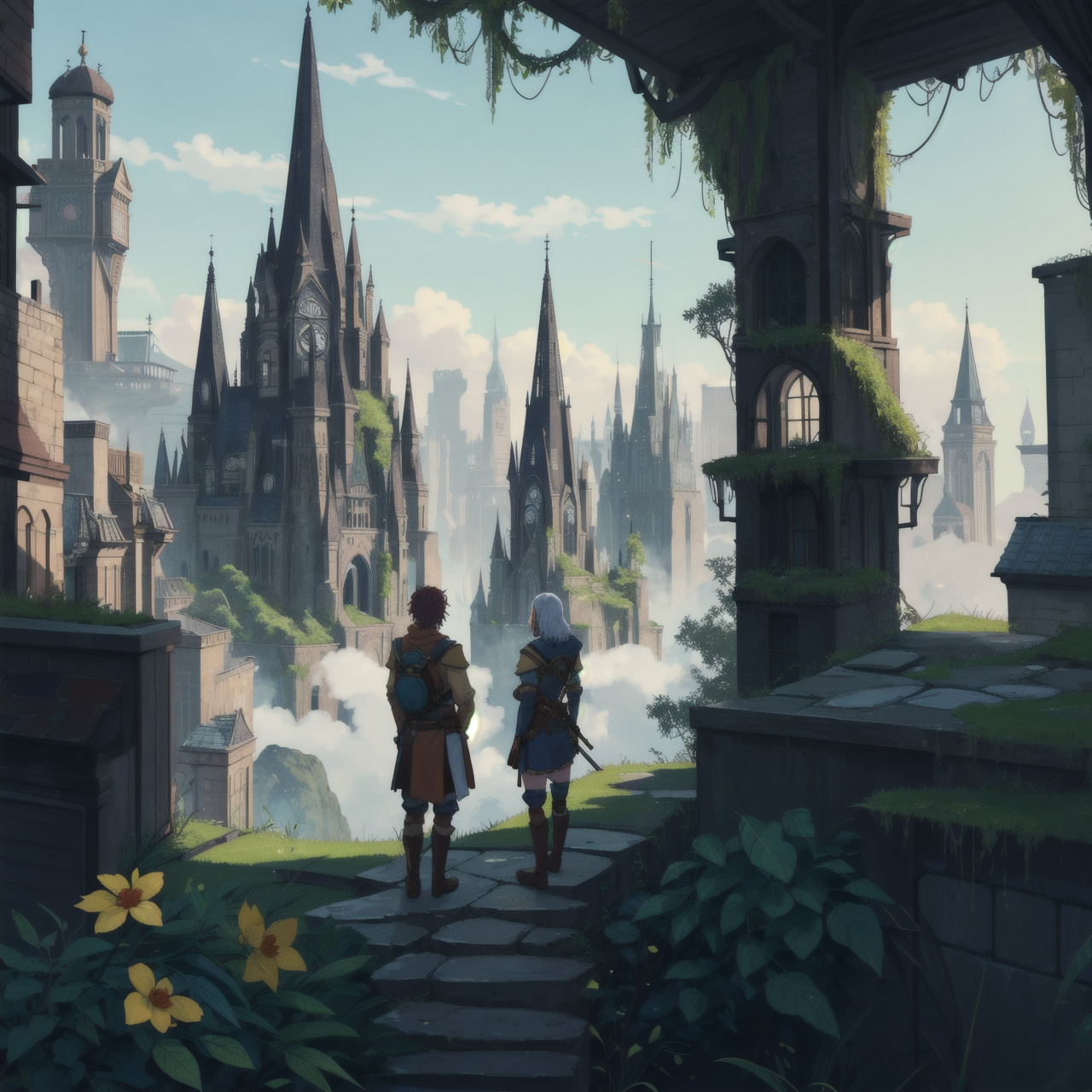
Finishing of the jaunt into LitRPG I am going to talk about when video games become reality. I make this distinction because LitRPG stories that take place in a video game either partly or wholly are video games. Thus need to be treated as fictional video games, which is a topic I will leave for a later. Today I’m going to talk about the world-shaking event that is a video game transitioning into reality. For anyone venturing down this path there are four things that I would recommend jotting down before starting the project, they are: Arrival Type, Players to Non-Players, What is staying gamey, and What is becoming real. Each of these shape the direction of the story, and how the world changes.
Arrival type can be whatever the worldbuilder wishes. I will split it into three buckets, Instantaneous, Waves, and Contiguous. All of these arrival types assume there is a fixed start and end to when the players can arrive in the new world. I hear those who want to ask: What if we just keep letting players appear in the world? You can do it, I suspect it will muddy the waters on if it’s a video game made real, or a realistic video game. If you think you can pull it of go for it. I will be interested to see the result. Exceptions aside, each has it’s up and downsides. If all the players come in one instantaneous blob that will be very different if they trickle in over a month.
I think the instantaneous dump of our now very confused characters is the most dramatic. Dumping a large number of people into a new world with no warning, usually though some impossible means, without any warning or explanations to be found. Things should get chaotic. Imagine if you, and however many friends, enemies, acquaintances, and strangers appear in a ruined city. Instant drama, instant hook. There are a few drawbacks, a good example is the opposition not being able to be given a head start over the heroes. If the antagonists are a head it has to be form either a faster rate of development or a different path.
Next is the wave method, where you get a dump of people like in the instantons however instead of everyone coming at once you break it into two or three parts. The first group gets all the drama, the later groups now have a guide, which may or may not be helpful. The benefits are that guide, and the ability to restart the first wave drama when the next group shows up. All in all I think this gives the most benefit when it’s first half, second half. Probably with unequal haves biased towards the second group. Because any waves after the first will have people who have done it already they can help deal with the shock of waking up in this new, yet familiar world.
Lastly there is the contiguous. This is where people will appear in the world at any time between date X and Y. I think this is best for low number of people to come over. Unlike having everyone showing up at once it means there can be a various degrees of head starts, or number of people late to the party. Our dashing heroes can come from any point along the timeline. Unless the time between X and Y is very long, think years, or very short, think hours go with either of the two above. On the long end having a handful appear each day, or every few days, lets a large number of people arrive without having to deal with all of the drama from everyone. On the short end, it can become a drama engine. Where people appear and keep appearing to keep pushing the drama higher in the beginning.
The next major decision is the population of players, or whatever other term you want for those being brought into this now ex-game, compared to the non-players, or natives as they could be called. This can be thought about in those two ways, a ratio: 10 non-players for each of the players, or as absolutes: 2.4 million natives and 12k players. I like the idea of setting a ratio for the game, and then locking that number for when the game ‘converts’ to reality. If there are 30 NPCs for every Player in a game and the game has 30 million players that would set up 900 million NPCs, now when say three million players transfer into the world that puts the new ratio at 300:1. There is no real advice I can give outside of those ways of thinking. There is something to be said for the players as apart of the new ecosystem, economy, society, and the likes however those are going to come later in the article.
The question of: “What’s staying Gamey?” is an interesting one. Because this is a game that’s become real, some things may, I’ll dare to say should, stay like the video game. For example if monsters turn into coins and assorted loot items when they die, will that stay the same? Was there a crafting menu, does it keep working? The more systems the game had the more that will need to be sorted out here. Some of the things I see as useful to keep around, things like game chat, voice calls and channels, and the magic of the inventory. Each world will end up with it’s own blend of game like systems that give it it’s final flavor. I split this off form: “What is becoming real?”, as these are the things that stay and don’t change.
Which leads us into: “What is becoming real?” as these may start out in the game and transfer to reality. For example: Food isn’t required to live, it is instead gives small bonuses to various things. At first, maybe the players don’t need to eat. Then they realize they need to later. Maybe that one guy who insists on just winning via his own skills he doesn’t need to min max using food starves to death. Now suddenly eating becomes a necessity, does the other end of it come with it? As far as things go that my example is on the milder side of things, I’ll leave that expansion for the adventurous minds. Regardless If the distances listed on the map are hundreds upon thousands of miles, yet based off of the speeds they are probably tens at most maybe the world starts getting bigger. How? Good question, glad you asked. Now figure it out.
Once these are sketched out, I would look for flavor within them. My imprecise language aside, these early decisions make for the bones of everything to follow. Minor adjustments at this step can have a bigger impact than you’d expect. If there’s a single wave, the NPCs massively outnumbering the players that will grow into a very different story than one where they trickle in to a fairly empty world over years.
I’m sure some of you have made the connection to the portal fantasies that I mentioned a few weeks ago. I won’t be so bold to say they are the most common of portal fantasies these days; I wouldn’t be surprised if they were. I won’t rehash what I said in that installment of Worldbuild Wednesday instead I will embed it here if you want to go read that.
 Grathew
There is another angle for this kind of story that is rather interesting, and, at least to my knowledge, less well explored. The story from the viewpoint of the natives. Instead of having the story follow the chaos that follows when normal people are dropped into the videogame avatars, start with the second order that is the natives realizing that the adventurers, or whatever else they are called, are in quite the state.
At first this may seem to be a suboptimal perspective. As the players in a videogame have much more in the scope of power and possibly. Yet the idea of a maid or butler to an adventurer or one of the maids or butlers who serve a guild trying to figure out what just happened, and what they should do about it. While trying to balance against the possibility that these demigod like beings could turn on them sounds like a wonderful black comedy, or horror story. I can see it going either way, depends on how you'd slice it.
With that all said and done, even if you are writing from the perspective of player turned citizen, don't forget the locals. They make for powerful foils, and often interesting company to the main cast. Likewise if there are ways of interacting with the locals think about how that would cross over when things change.
With that I'mgoing to wrap up this week's Worldbuild Wednesday. I will be starting a new topic as I belive this one has been exhausted.
See you next week.
If When the Game Sucks You in sparked ideas for your worlds, ponder sharing it with fellow creators. Your support fuels the Gazette’s mission to spark communities like the one that shaped it.