What goes into a Name?
Mailbag Monday ep.1
This week we are starting off Mailbag Monday with the question: “How do you come up with names for people, and places?”
The issue generally is: “I have a character, and I can’t find their name.” The story teller refuses to continue with a temp name like Dave, or Sara. While both are good names they don’t fit with the rest like, Elizabeth Harding, or Johnathan Cromwell, to borrow some British examples. Likewise Overthere doesn’t fit next to New Devonshire. I have a few solutions.
To get the most complicated answer out of the way, if you’re inventing a language you keep at it. Draw from real names for inspiration and do your thing. You probably know more about what you’re doing than I do. Yet for the more normal people creating a language to name things is a bit “beyond scope”, as the corporate speak would put it. There for there must be another way, and there is.
Start with a theme, could be British like above, could be Russian, could be nature, and work within that theme. Second I would go look to the random name generators and behind the name sights. The former, randomly pulling a name or set of names on a theme is good for when the theme or nationality of the name is more important than the name itself. The later is more important when the name should mean something.
Randomly picking a name within the correct bounds is fairly easy, there are various sites out there that can spit out a first, last combination for a specific nationality. I would then use the theme of the nationality to convey something. Perhaps a proper British name highlights the prim and proper nature of the gentleman in question, or a Japanese name to highlight how different she is from the rest of the Europeans in the story. There can be more if one wishes to pull from the stereo types of the nationalities used, or counteract them.
Now for picking a name that ‘fits’ due to what the name means is a bit more complicated, generally this means searching though registries of names and their meanings. This can be a bit daunting as there are variations and permutations. Likewise with the resources I know are available there isn’t a good way to go via theme or meaning, but rather just name.
There is a way to merge the two, enter our new friends LLM, or as you may know them AI. As much flack as I may get, AI has gone from amusing gimmick to proper research assistant. Thus putting a prompt such as:
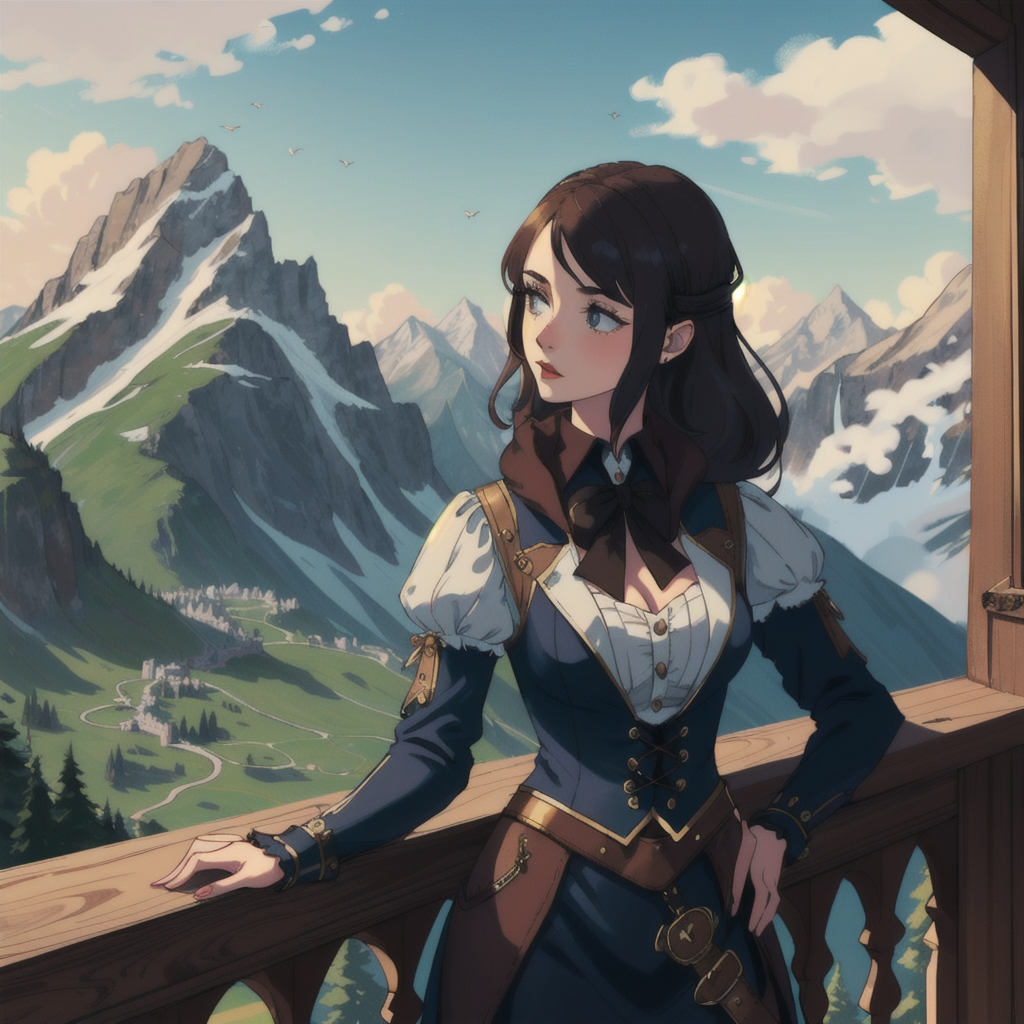
I am writing a Victorian fantasy romance with steampunk elements, the heroine is a young British woman exiled to the German alps. I am looking for a name for her that would fit the time period, her place as an outsider, her family’s connection to alchemy and fit in with the more traditional Victorian romances while not appearing in any of the major ones. Spit out five first, last and positions in the British nobility, the reasoning for it and the recommended combination of first, last and position.
Now which AI to use, and what exactly the prompt should be to get useful output, will be an exercise left for the reader. I put the above prompt into both Chat GPT and Grok ( twitter’s AI) and got good output, with the recommended name for this heroine: Lady Aurelia Ravenscroft from Chat GPT, and Lady Aurelia Blackwood from Grok. This is where asking for more than one output is helpful. For example the first names of Selina, Althena, Cressida, and Imogen all appear. All would fit, and give different angles on the same angles. If one doesn’t like what the AI spits out ask for another set or move on to the next AI. Or maybe the AI will spit out something that will inspire you. Which is probably the best way to use AI for creative topics.
Now on the topic of places. Places are generally not named anything artistic. They fall under four main genres of names: What it is mistranslated though the years, Who found it or someone the person who founded wanted to honor, Religious connections, and By committee.
By committee is the easiest to recreate, come up with something non-specific and, ideally offensively, inoffensive. Committees come up with bland names that may or may not have any basis on what the place is or should be. I would generally use these for things that are newer, smaller and not likely to get renamed by the people who live there. Because otherwise they would rename it.
Continuing in reverse order, places with religious connections generally are connected to the beliefs of the area, the exception being when a new religion builds churches, monasteries or other such things. Generally stick to either a deity or something connected to the religion. I’ll go into this a bit more in detail when I cover religions and how to use them on Worldbuild Wednesday.
Naming a thing after the person who found it, or what they want to name it is fairly easy. Yes it would imply coming up with a character yet if one builds a world though stories I’m sure there’s an explorer in there somewhere. If not they make for good initial story tellers when they come though the area.
Lastly the translation and mistranslation of place names. This is best used when something is old, had a new language come into the area, and remints of what it was called linger to this day. The world is full of these, Europe is perhaps the best example as there are so many languages and it’s been conquered by different languages so many times. This process of naming it one way, renaming it another only works if one has a language or a naming language.
Creating a language is hard and difficult, it is a topic I’ll be looking into once I get something more concrete to show off. Which is why I skipped over it when I started this answer. Then there is the naming language. This is a process of taking a name or a word and ‘translating it’ into the naming language. Generally these involve doing things like replacing all Ks with Cs and Ys with Is. However one can do any string of adjustments one could want with a naming language. With the help of our AI assistants more complex processes get easier. Just be careful with the prompts, and remember you can ignore the AI when it decides to be brain dead.
With that I hope this answers most questions on naming and I look forward to more questions coming soon.