
Vertical Planning
Worldbuild Wednesday Ep. 11
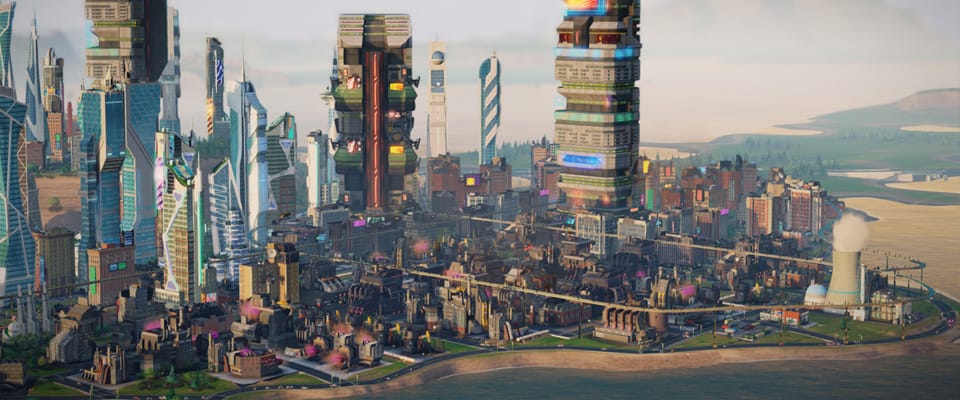
I have been fascinated by the idea of a vertical city. These range from the giant city within city structures often dominate their skyline, to massive cities where buildings are built on top of buildings. Most commonly associated with the cyberpunk genre I think there is an argument for a more vertical city across the genres.
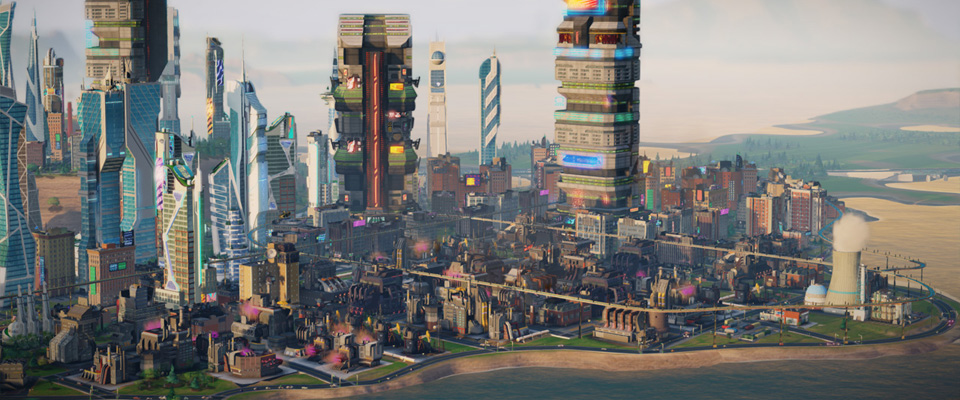
It is easy to find examples across science fictions, from the giant skyscrapers seen above to the hive cities seen in Warhammer 40k. The science fiction genre has many options for this kind of city. With the first entry debatably being Metropolis by Thea von Harbou in 1925, or the movie by Fitz Lang in 1927. Where a city is split into two layers. With one city functionally above the other. This can be seen taken to it’s extreme with the hive cities in Warhammer 40k where the different layers of society live on different layers of the city.
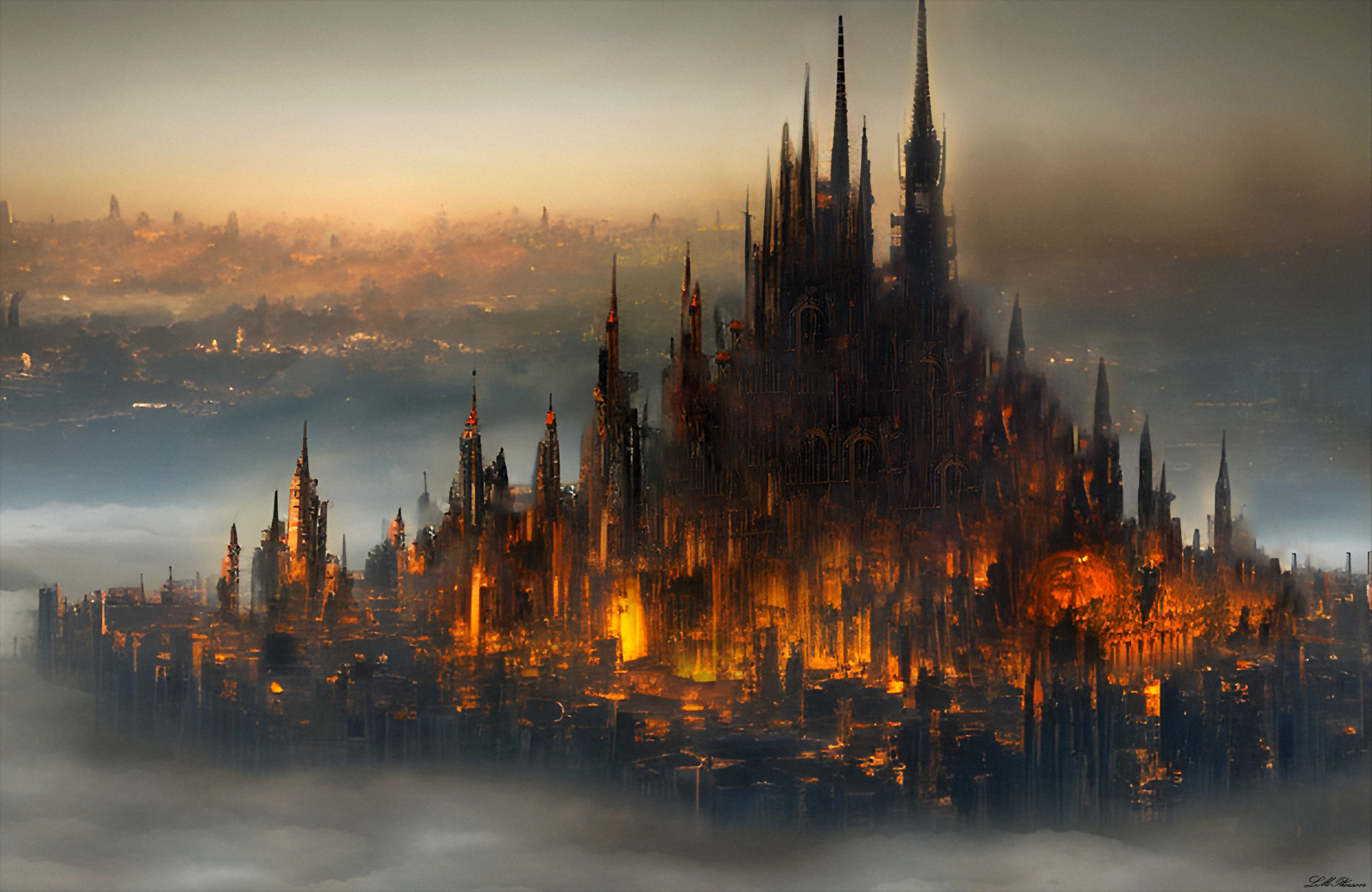
Generally in science fiction these are used to highlight how compressed and oppressive the civilization has become. With people living on top of each other. Sometimes all subtlety is thrown out the window with the depictions in this option. Metropolis is likely the root where the ruling overclass lives above the laboring underclass. Yet there are other options for this structure when it comes to symbolism.
Yet symbolism is seldom how the world is created.
So how would a sci-fi end up building a hive city. There are two general driving factors, a lack of space and a desire to keep things close together. The first is fairly obvious. When there isn’t room to build out, build up. Most of the cities that have tall skyscrapers this is the limitation put on them. The second, wanting to put everything in one spot is similar to the first except instead of being forced to do so it’s out of a desire to keep things ‘convenient’ or to control what is or isn’t in the area. A corporation building a mega tower to keep their people in one place. Likewise it may be helpful to an early colony to take up a small area and hyper-densify instead of spreading out across the yet to be fully tamed wilderness.
These are the same pressures that could affect a fantasy world.
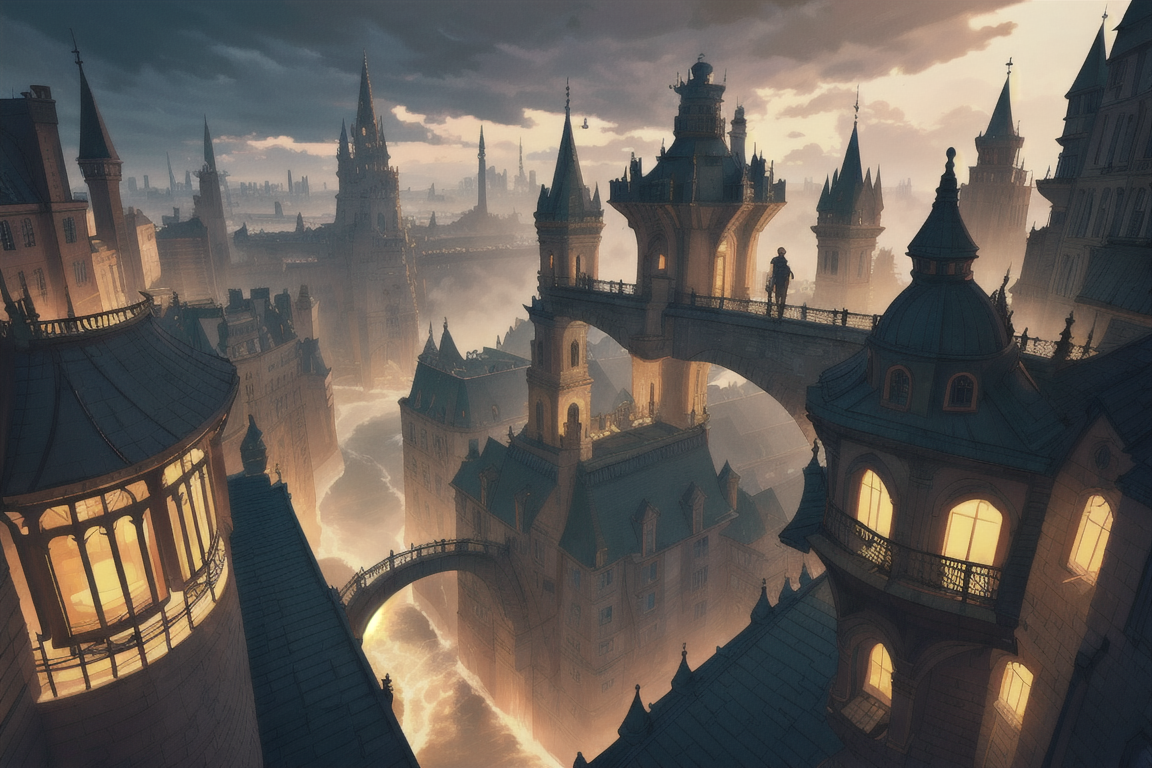
The issue is that there generally is ample space, and a perceived lack of technology to build upwards the same way one can see today or in the future. Yet fantasy often has magic which generally can be made to make up that difference. So why don’t fantasy worlds build upwards rather than outwards?
Aesthetics.
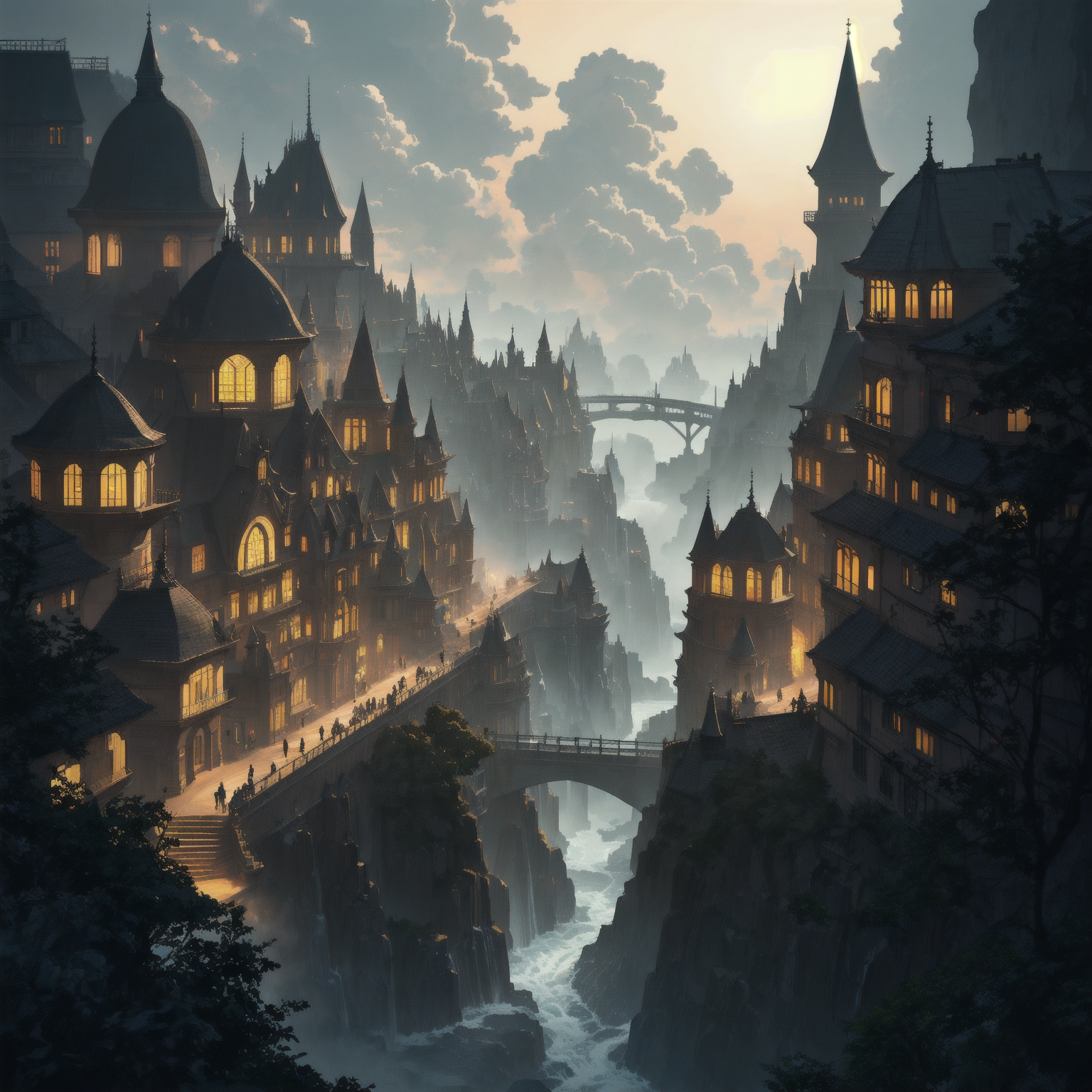
At first glance this may seem like an overly simple answer. Yet I cannot come up with any other reasonable explanation. People don’t want to see built up fantasy cities. Where there are layers to the city. Even if it would make as much or more sense than within sci-fi.
Imagine a human settlement built along a river, on one side there is a dwarven mountain range on the other an elven forest. Over the years elven and dwarven traders have stopped over in this little human settlement. As time rolls on this settlement evolves into a kingdom with a permanent dwarven and elven presence. To keep from starting an international incident, the dwarves begin digging an undercity and the elves bring in some saplings to grow. Roll forward a few more human kings and the river has carved a cliff that provides a view into the city built by the dwarves and the city now sprawling around the three heavenly trees the elves planted and then built in. Now there is a degree of verticality as there is a large elven village above, a human city on the ground and a large dwarven village below. By population it’s overwhelmingly human, and they make up equal parts of the subterranean and arboreal residents. This leads to a vertical city. Elven dwarven relations aren’t soured by having to bump shoulders more than needed.
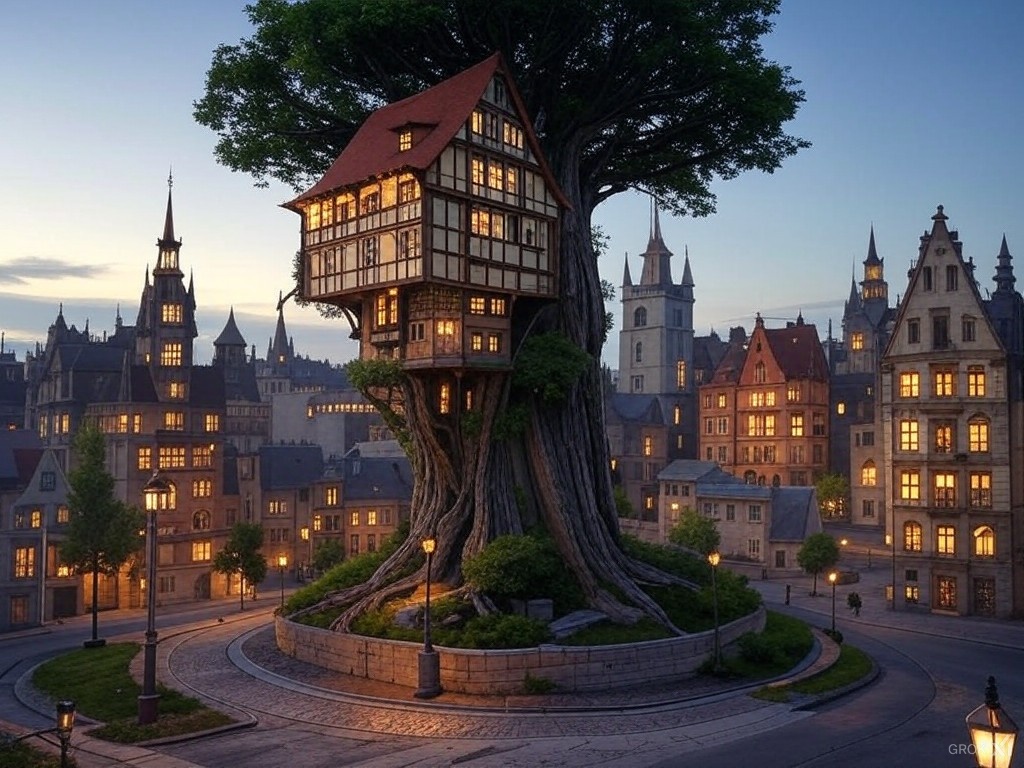
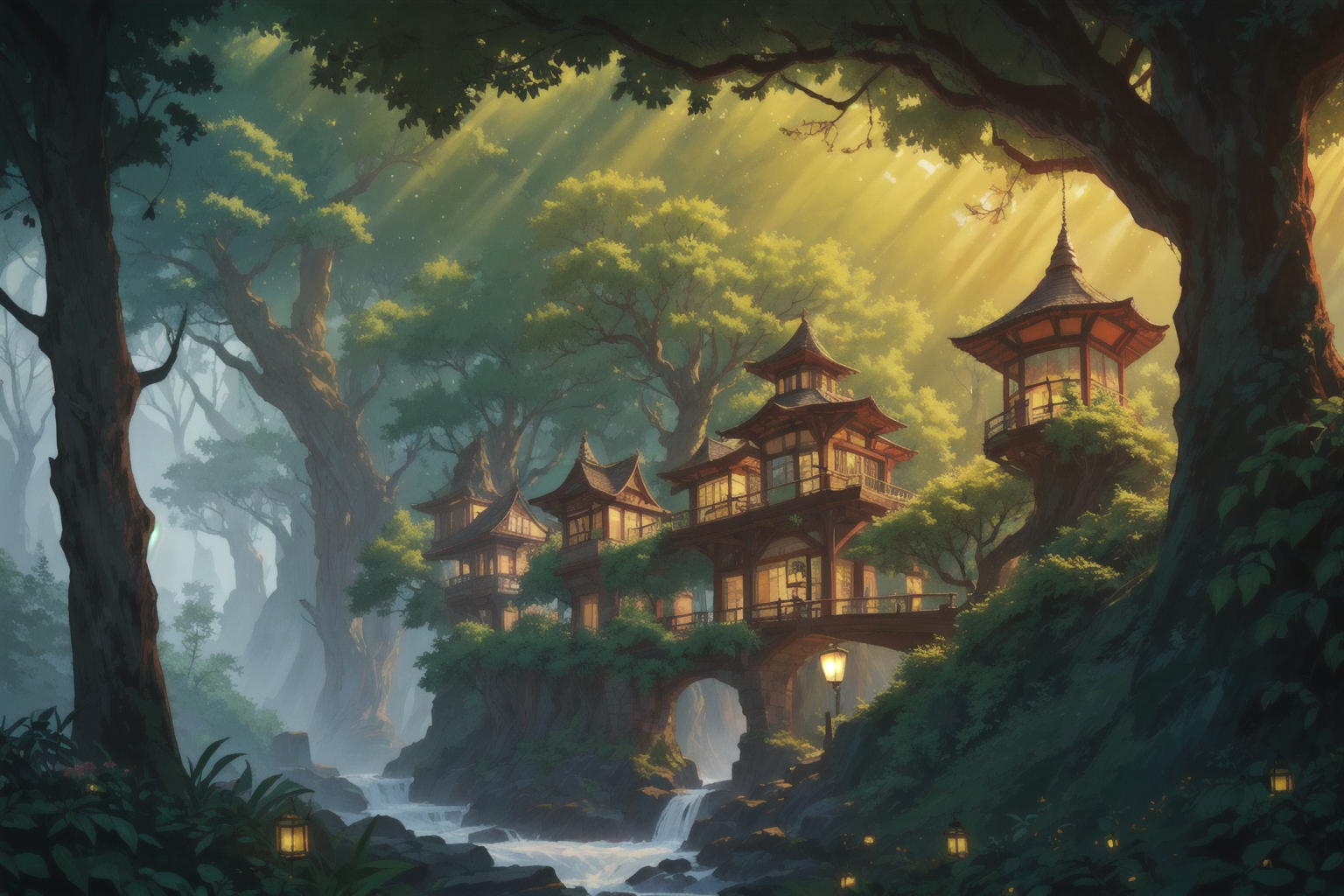
This would create a vertical city, not in the same way that one would find in a science fiction yet it is a vertical city. Elves live in canopy above, humans on the ground and dwarves underground. This verticality would be uniquely fantasy. That’s not to mention the other types of fantasy terrains. Lets think back to that elven nation. If they live in the trees, their cities could or would have a degree of verticality.
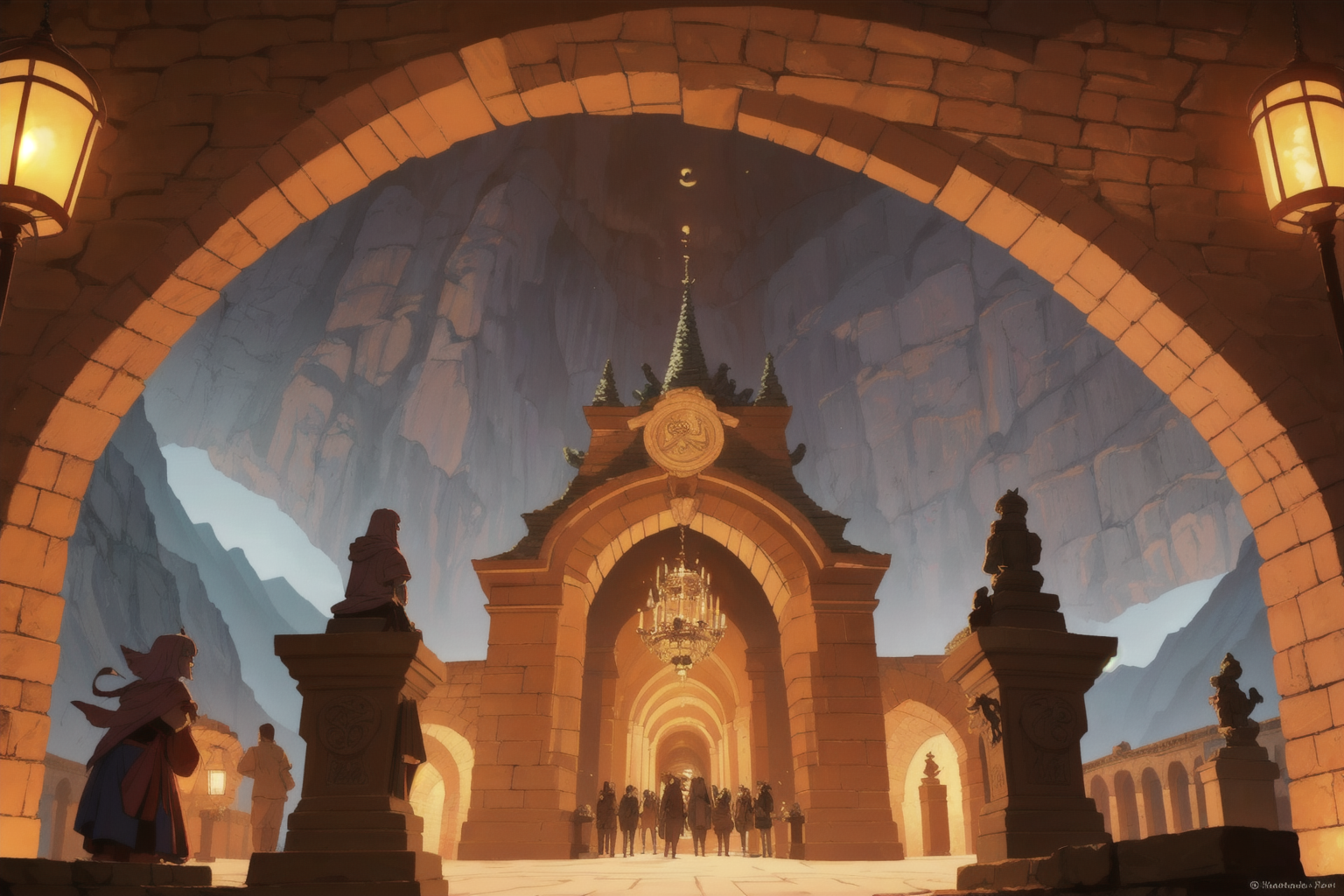
The dwarves would similarly have verticality in their cities as having access to the vertical space inside of the mountain It could be something akin to an ant hill. Where there are chambers above and below other ones with shafts and tunnels connecting them. Should the dwarves have some great halls there could be buildings climbing up the walls with streets ringing the void, elevators rising up and down between the different layers. Since dwarves are known to be industrialist maybe train tracks would be woven in there as well.
Then we have all of the extremely steep sided mountains, deep canyons, and other fantastical geography that may need settling. What would a city built inside of a desert canyon look like? On a mesa? What if there’s a swamp where the only solid ground is in the low canopy? These are only some of the options that one can find in fantasy.
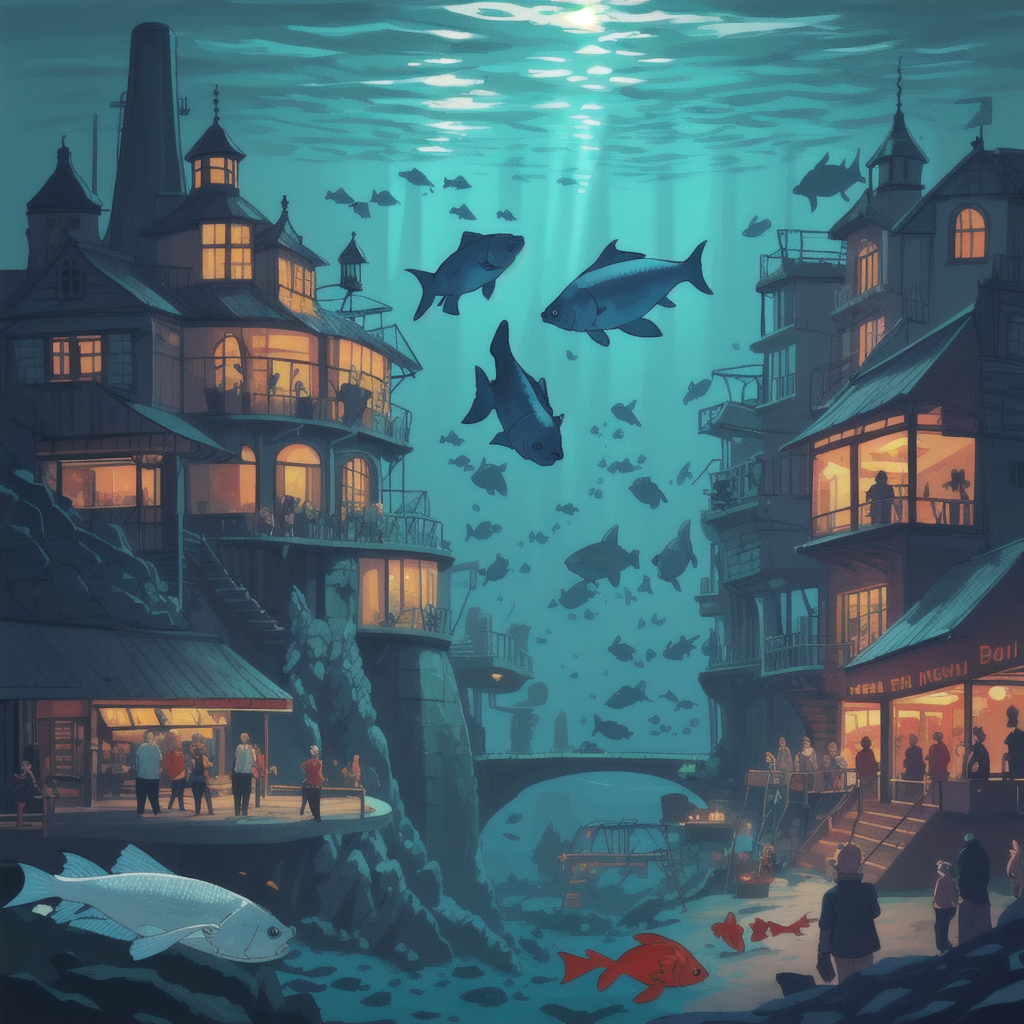
One cannot forget the other options found across fiction. For example how would one design a city on a flying island? In some cases it will be the same as on any other piece of land. Yet if the island gets scaled down, to collections of floating rocks things could get more interesting. This then turns the surface area into a volume question. Which would in turn could lead to vertical cities. Similarly underwater it may be better to build with a degree of verticality, especially since vertical movement would be easier than in the air.
Likewise would a fully aquatic species, say mermaids, want to build wide cities or use their ability to simply go up, to add more verticality to their architecture. A small tower like building could be an apartment with different areas set up around a central shaft. There’s also the question, would there even be floors? Walls may still be needed to support the roof. But floors may be irrelevant. The same could go for roads. Floors and ceilings may be status symbols, or simply used to partition things off between areas. Imagine the line of a young girl coming home to her mother gushing about how her new boyfriend’s house has a floor, and a roof; not in the apartments stacked on top of each other either this is a proper house. Personally I think the normality of floors would depend if your aquatic race has legs or not. If there are legs floors are probably going to exist.
The same goes for space, where it may be more economical to build things like buildings, with small decks stacked one on top of the other. This is notably found in The Expanse books. Where the ships are structured like skyscrapers with small deck area stacked on top of each other. This comes from their way of simulating gravity by keeping the engines burning and often a desire to keep a “narrow” side even in civilian ships. The stations using spinning to create gravity tend to be cans, with the inside of the can being the flat floor. Meaning they follow a much more standard city layout with sometimes there being an over/under city. The interesting part is that the ‘under city’ is the wealthy area as that’s where the full Earth gravity is and the impoverished belters will get crushed by it.
Yet both of these are ignoring another desire for verticality, flight. Flighted peoples may need spires, flat roofs, or other options to take off and land. Roads may be only for inside the densest of cities where walking around becomes more common.
Regardless of setting don’t ignore the power of the vertical dimension. Because there are options some less explored than others.