
Fertile Fields
Worldbuild Wednesday ep 32
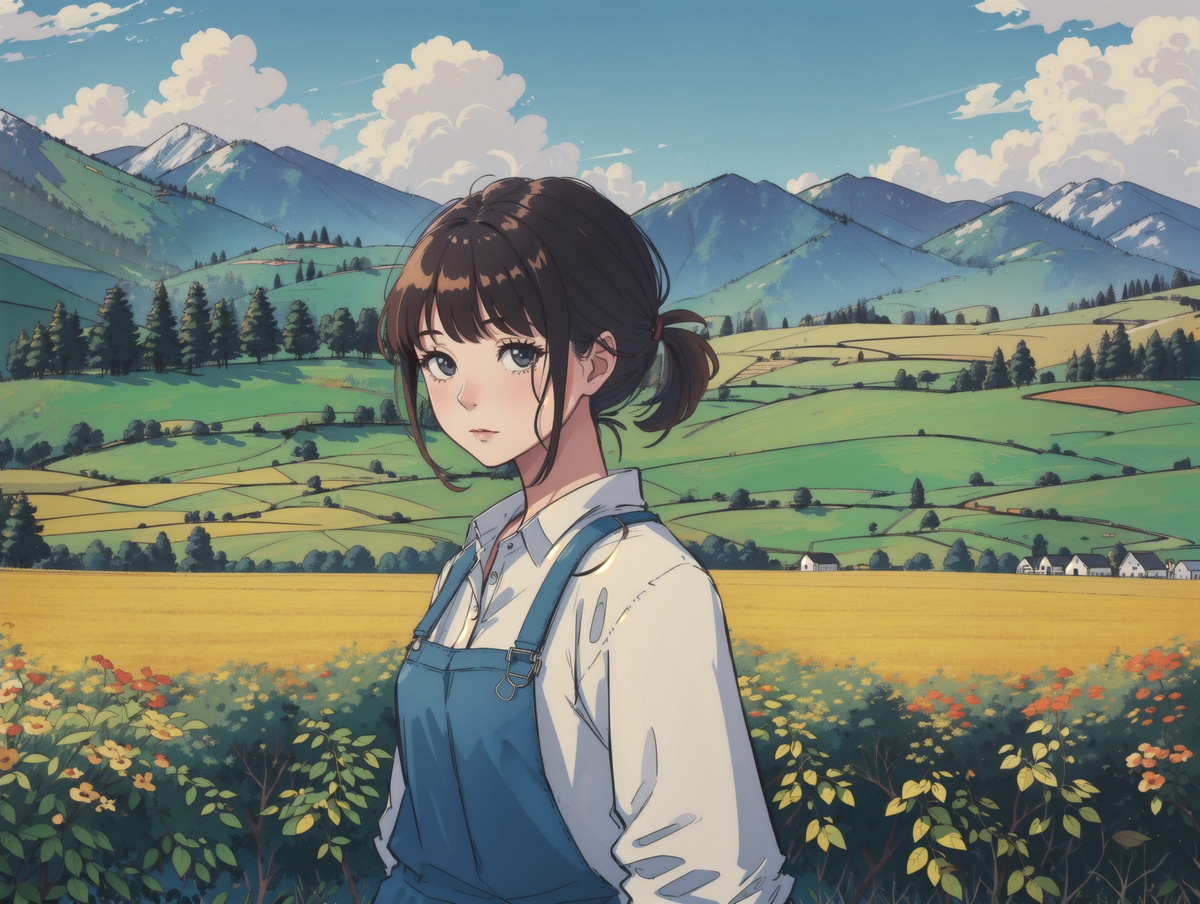
I’ve decided to theme November around food. Thus I’m going to start with agriculture, there is an argument for hunting and gathering however most stories take place in societies, and society implies agriculture. It is possible to do a society without agriculture, even one with cities. I presume that anyone who knew of that exception probably knows how to make it work. That said let’s talk agriculture.
Agriculture at the end of the day is about creating and maintaining a sustainable source of food. It can happen at various scales ranging from the family to industrial, yet the goal is the same keep bellies full. Thus things that can be gained from agriculture are often to become cornerstones of meals, and cultures. This means that if a region can grow wheat expect bread, if it can grow rice expect fried rice. Likewise, if there is a fruit or vegetable that is common, and possible to cultivate than it will show up.
Modernity will come in and cite that ‘geographical determinism’ is a trap to avoid. I disagree, drawing from the land and looking at what humanity did leads for good rules of thumb. If the lands one has built or wants to build would match terraced rice paddies, use that as a base, if the lands would support rolling fields of wheat and barley go look into those. Likewise the space needed for animals will influence which ones get domesticated, and for what reasons. Is the magic space-cow better as a beast of burden or food? What about the goats?
This should be paired with who is doing the agriculture. I see this as having three levels: Family, Community and Industry. Family means a single family grows their own food. It could be beds of plants in their back yard, or a few acres of crops and animal pens. Regardless each family is largely concerned with growing their own meals and trading whatever excess they have to neighbors, friends, and extended family for favors, or their own excess. The Community level farmers are able to manage larger plots and feed their community. Generally there will be a small core of farmers and then the community will come help in the fields for when things need to get done quickly, such as planting or harvest times. Once farming becomes it’s own industry a disconnect between farm and food begins to happen. This stems from the distance between farm and plate, it also allows for the highest degree of specialization in the population and thus the most advances in tech and society.
Yet even with a specific level there can be as many ways of doing things as one can think of. Not to forget, there doesn’t have to be just one system, for example there could be industrial scale farming and a culture of families growing potatoes, carrots, tomatoes, and onions in their gardens. There could also be community focused farms and the industry farther out. Mixing community and family levels is rather common in history. Where those with more land tended crops and those with less kept vegetables and animals.
With these categories set up there’s then the question of the relationship to culture. To draw from a simplification of anthropology, there are two models commonly called: Wheat Cultures and Rice Cultures. The short differences is that the Wheat Cultures are more individualist, with smaller family units, while Rice Cultures are more collectivist with larger family units. This comes from the amount of work on the plant and harvest side of things. Wheat taking less man hours per unit area (as a rule of thumb), thus leading to more independence on the farming side of things.
Lastly some thought should be put to the crops and livestock themselves. While the specifics of the plant or animal species can be left for another Worldbuild Wednesday. There are some things to note when it comes to farming them. Firstly, how much time per day does it take to keep healthy? I would measure this in man hours, it helps to determine things later. Next how much space do they take up or how many fit a fixed area. Then how many people can be fed for that area. This is the final check to make sure that the first three line up.
An example: I am building a fairly well forested and hilly region. I know I want it to be a community centered farm. Where the majority of the farming is done by a small group but during the planting and harvesting time everyone comes out to the orchards and fields to bring in the harvest. I want it to be somewhere between our markers of Wheat and Rice. Meaning the farmers will have larger clan like family structures, likely centered in faming villages, and the city folk will have smaller families.
I am thinking of having three major crops, one tuber, and two trees. I am thinking the tuber is some kind of carrot. The orchards would consist of a fruit tree, based on the bread fruit, and a grain tree, think ears of corn hanging off of trees. On the animal front I think there should be two birds. One will be flightless between an emu and ostrich and used for both red meat, feathers, and as a pack animal. The other will be smaller probably duck like, and well treated like chicken.
Now there may be dozens of other crops or animals that can be included in the diet or agriculture however I am focusing on the staples. This is not only for time sake but also because the staple crops will set the tone. If the Jimson family grows something different, and they are the only ones in the region who do so that crop won’t have as big of an impact.
Exceptions accounted for, what should the math look like for the five crops and animals. I think the grain tree should need a lot of harvest time but not much during the year. However planting and growing new orchards will take a lot of time. Meaning increasing production will take a lot of time. The breadfruit tree would be similar, high output but long lead time, and lots of lead labor. The carrots are quicker to get increased production but can’t feed as many people per area. Meaning it takes more area and thus more work per number fed. However they are easy enough to take care of that the work per person fed is lower than either of the trees. This provides a counter balance to the higher cost orchards. I should also note that all of these are ‘year round’ food crops as they preserve well enough that each harvest will last till the next.
Moving on to the birds, the flightless bird is generally raised for labor it is less work for food, as the infirm or excess become food, the rest are better off hauling and carrying things. The ducks fall under the egg laying bird, so that those that do not lay eggs will be eaten, which gives me two lines of math for it, ducks for eggs will be lower time per food and ducks for slaughter will be more, since it takes longer to grow a duck. There can be some overlap with the egg layers who don’t any more, I like the idea of splitting them into two species, one for eggs first one for meat first.
The rough sketch of labor per meal jotted down, what kind of culture would pair with these farms? I see this as a split culture. Something that I will need to talk in depth about another time, the short of it is that there is one culture yet two major groups with in it. These groups will be the farming clans and the city people. Because of the orchards needing a good a mount of land, and lots of work to get established. The carrots and animals are the blend towards cities as they are more labor efficient than the orchards. Mix in some smaller scale crops, I’m thinking some grains, fruits, and vegetables to round out the agriculture and provide some ‘minor’ players in the agriculture’s culture.
This lays the ground work for a culture where clans could form around the orchards as they are valuable, labor intensive assets that could take generations to grow and tend to. Where as the less labor intensive carrots and birds, allow for more specialization of labor which allows for cities to form. I think this mix should be similar to China or Japan, however having another option will let us pull power from the rural lords to the cities. I think it gives an extra layer and some more layers to play with, and more conflict points. It should also give some redundancy and hopefully keep the starvation and cannibalism down.
Yet there are other options, maybe it draws from the European clan structure instead. This would break up the orchards from one large set to more smaller ones. Which does make the crop more manageable and removes points of failure. Because I have three separate staples there is some built in redundancy already. By spreading out the holdings the food supply gets more decentralized and thus resilient.
Regardless of the type of culture I know there will be harvest festivals. The high effort harvests should bring people into the fields and thus create harvest festivals. These would be community centered, probably religious based with a god or goddess of the harvest taking center stage. It doesn’t have to be, with it being a civil festival where the community gives back to the farmers who grow and tend to the food all year. Both have lots of potential when it comes to stories. These also don’t have to be exclusive, with a religious root and a civil extension. Something where the starting is a civil festival for the harvests, that then transfers into the religious ceremony that ends with a massive party.
Thus every year when the orchards are ready for harvest there would be a festival, that brings in the fruit and grain from the trees. Once it’s done the festival of the harvest goddess starts and runs for a day or two before winding down with a storage party as everyone gets their stores set up for the incoming winter.
I hope by now you can see the leaver that is farming, and how you can use it to poke, pull, prod, or grow the culture and world around the culture and story. I would suggest using it as a background layer, where you know how this roughly works and what is associated with it and if it’s useful to the story bring it out. Otherwise leave the results in the meals and not much more.
I’ll see you next week.
As I mentioned this month’s Worldbulld Wednesday will be food based, as such I’ve got more tasty topics coming. What do you think about agriculture, what do you think your worlds use? Let me know in the comments.
If you want more? Subscribe (it’s free), I do two posts a week and only advertise Worldbuild Wednesday. This week will be Fantasy-Friday, talking about the beginnings of magic. I also put out short stories the last one was the Halloween special Josie. Two will be out this month The Girl in Green and High Rollers.
Subscribe to not miss anything!