Customs and Culture
Worldbuild Wednesday ep.30
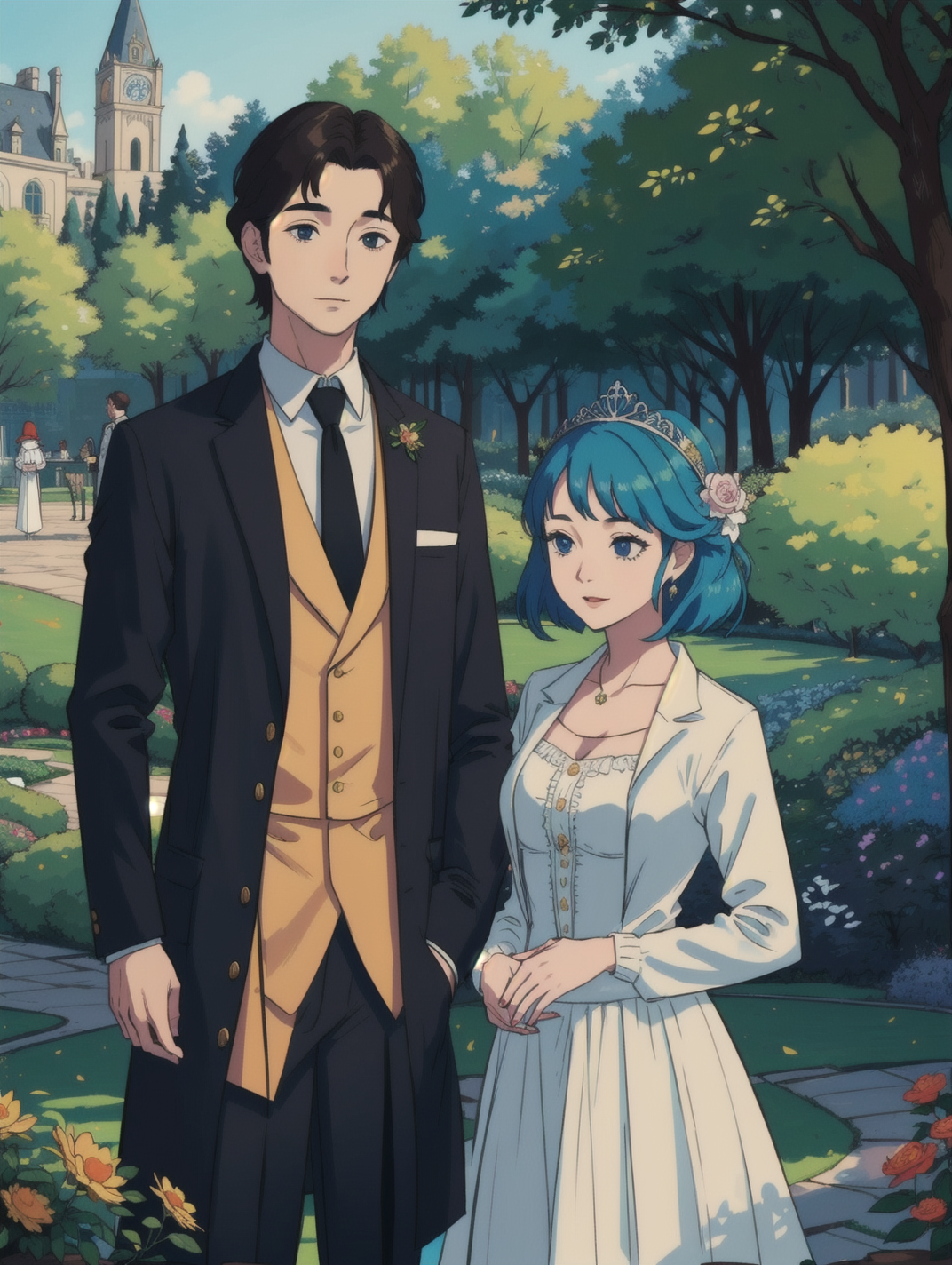
I find the concepts behind cultural norms rather intriguing. One of my favorite things to do when going though a story is trying to determine what customs are missing or which ones shouldn’t be there based off of the slice of the world shown. One can do a lot with the context around customs and which customs ether exist or don’t exist.
The first thing to think about is where do customs come from. Every custom comes from somewhere. It could be a left over from was needed for survival, or a way to signal intentions, often it’s both of these at once. They should be built in different ways and then used in different ways.
When it comes to building a custom pick which of the two buckets it will belong into first. For those that are leftovers from survival these will likely being centered around hygiene, food, or marriage. If they are ways of signaling intentions, these customs can come from anywhere, myth, religion, a famous individual’s preference, or anywhere else one can think up. Origins sorted, what should these customs look like. I note them down as two parts: the action, symbol, or the likes, the what of the custom, and then what it means. With the bare bones of customs outlined, how does one determine which ones should exist or should be nonexistent? That’s where things get messy. There’s a specific blend of tech, magic, people, and history that could create any specific custom.
That outlined, how can I assert that I’ve seen in stories that there are missing customs? Cultural exchange based stories, usually courtly romances. It may be a surprise to those who know me in meat space; until you read one and realize that they are 80% world based, and all the characters are meant to be representees of their corner of the world and thus they are all tied to their worldbuilding. Before I devolve into a tangent let me suggest a hypothetical:
Ariya Thunderheart, daughter of a powerful northern chieftain, has been promised to Viktor Storbmringer, a baron from the Empire of Steve, who has tamed the savage northern mountains and their peoples. The Empire sees this marriage as a formality, the final seal on the peace accords brokered by Viktor. As the ink is drying on the treaty Ariya’s father reminds her that she must bring Viktor back to the mountains; he will be crowned King of the Mountains, to finish making their lands his.
This blurb highlights some customs and how to use them to deepen the story. The core conflict will revolve around what people see the marriage between Ariya and Viktor. Yet how many customs will show up in the culture shock of either of them across the story? From manner of dress to gender roles and everything in between, if it’s customary it will likely come into play. With this scenario what types of customs would one expect to see come up? What would be strange if it didn’t?
If one assumes the strange mix of Victorian and feudal Europe as the general draws for the setting, as these stories tend to do: What would be the expected gaps? What would be the overlap? This is the foundation of intentional culture building. For those who have been here since the beginning you may remember my Punnett Square, for those who weren't.
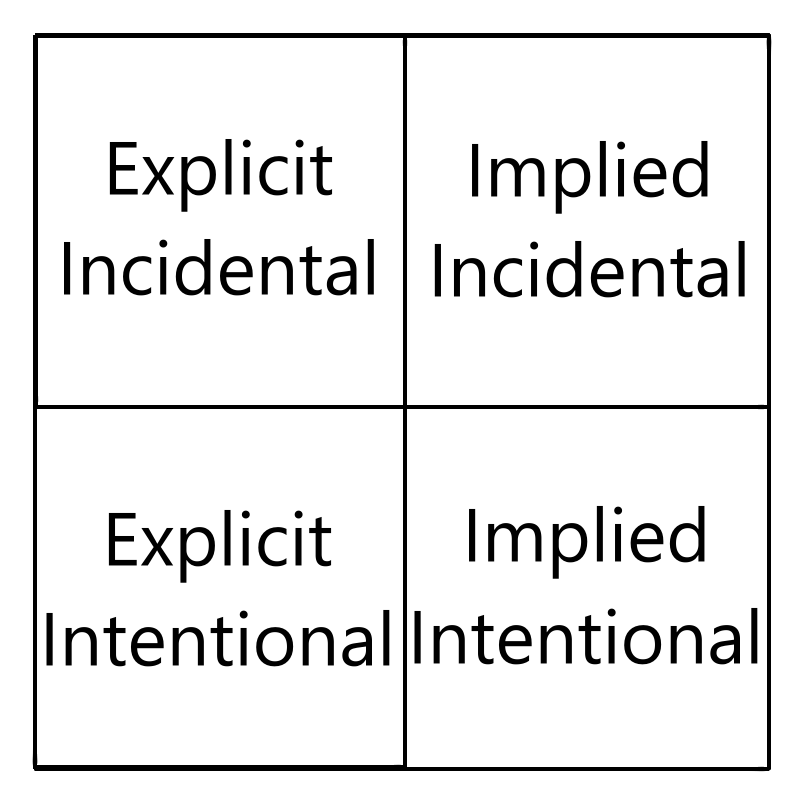
For the majority of the storytellers I’ve talked with see this portion of worldbuilding as characterization. While not wrong, it leads to incidental worldbuilding, of both columns. By defining the customs in the cultures, we intentionally build out the cultures. With each custom adding into the culture. Thus by thinking about the customs we build the culture, and from the cultures one can develop the character. This leads to characters not feeling as if they are standing in for a culture but rather apart of one. Yet if the story needs a character from a culture than one must participate, regardless of how they end up created. As such the culture sometimes ends up serving the character rather than the other way around.
This is a story first way of doing it. By creating the ‘results’ and adjusting both the results and the story to fit the final culture, it leads to a fairly efficient use of time. There is a chance of missing things, as the created culture is one to fit a form. Which accepting, or adapting in revision, is what the modern recommended processes is. I find that for once modern process isn’t completely wrong. I think there’s too many concessions to characters, and story. Often leading to what I call ‘somewhere [descriptor]’, the place and culture are what one expects from their descriptor. A forest village could be any forest village, the mountainous kingdom could be any mountainous kingdom; differences do exist yet they only go so far. I think of it like chicken nuggets, one can use different breading and seasoning mixes yet there’s only so far you can go before it’s not a chicken nugget anymore.
The way I prefer to do it is to evolve the culture. I hint at this in The Shoulders of Giants, as I talk about history and how to use it to build up a setting. I than detail out how to do this in History Dilation, I wouldn’t be surprised if I reread this and go back to deepen my evolutionary process. Regardless; starting with a simple proto-culture, and the customs associated, step forward on history, and cycle until I get to ‘today’.
Thus to start with the culture I plot out the history, the major events and what changes I think should occur. Roll back to the start and sketch out ‘culture of people at this time’. It’s nothing super detailed but it’s enough to give me an idea. From there I have the bones of the culture plotted out. As most of it will be left in the history books, fleshing it out can happen later. This being the bones should be good enough.
On these bones then layer the customs. If you want a leftover from survival figure out what would be needed in that portion of history, how that would become a custom, and then what would change to make it a ‘left over’. Signaling is less time dependent, and more situation dependent. What situation did you put them in? What did they need to fix it? How does that become a lasting custom?
The though line with both is that there is a lasting benefit to the culture. An example would be the handshake. As the story goes, there was a need for men to determine if the other one was approaching under peaceful intents. To do this they would offer their weapon hand to their counterpart. Roll forward a few centuries and you have the handshake we now live with. Apocryphal or not it makes for an interesting story; and one that can be used in our own worlds.
As there are different points when the culture can adopt a custom, it allows for an easy way to determine what can be called ‘the old ways’ should that be required in the story. If not the older customs may be given more importance as they are older, and thus likely to be wider spread and practiced. Likewise for those who have multiple cultures interacting, having these time lines can allow for historical cross pollination. Which is always good fun, and deepens the world over all.
Thus after creating the cultures and sketching out customs we can drill into the characters. I’ll use Ariya as my example. These are going to be very aggressive mountains, I’m thinking a mix of both ranges in the continuous American states. So lower, tree covered mountains and then tall mountains that go above the tree and snow lines. This means roads, and infrastructure is rather difficult to upkeep, this does not mean there are no cities. In fact in cities there are fairly good infrastructure. Couple that with a few nomadic herdsmen ‘cities’, and the threat of proper monsters, in addition to the usual wolves, bears, and mountain lions.
These people were functionally driven into these mountains by the predecessor to the Empire of Steve. As I see the Empire of Steve, akin to the Holy Roman Empire, a gathering of bits from an older fallen empire who’s biggest rival is the other half of said empire who also wants to reform the old empire. Therefor our mountain people have a chunk from that old empire as well, due to cross pollination and the likes.
This means Ariya could end up knowing the old language of the empire, and some of the old ways of said old empire. As they got left behind in the mountains and were found to be useful. Where as in the lands that became the Empire of Steve the knowledge and customs were warn away by decades of war. Mix in some ‘needs must’ and a martial nature to the culture from the hostility of the region and Ariya may look like the delicate flowers of the court, yet has both street smarts, ancient wisdom, and brawn over them. Which certainly won’t get her into any trouble. I will leave the rest of the culture building as an exercise for the reader.
Regardless of how exactly one creates cultures and their customs; what matters when it comes to culture is making sure that the culture, world, and characters all feel bidirectionally linked. That character has to be from that culture, and that culture could be the only one that could create that character. The Shoulders of Giants shows that cultures tie to worlds, and worlds to cultures though history. Meaning everything gets tied together at the end. This should outline how to turn history into culture, and sketch out how culture produces characters (that will be expanded on later).
Until next week. I’m thinking something to tie in with Halloween.
I hope that you enjoyed this jaunt into cultures. It’s a very complicated subject. Probably the second densest I’ve attempted after Who Knows? where I talk about in world character knowledge and how to sort that out. I will admit it isn’t my best work. But I can always revisit it. Let me know if you get this or if I need to clarify some things. I know I can get a bit lost in my own head sometimes.