
Building a Military pt. 4: Infantry Equipment
Worldbuild Wednesday ep.7
Apologies for this being a bit late, it turns out my friends’ grandfather is dying and they needed me. I’ll likely be splitting up this series going forward to help keep things interesting, and to give me time to research things like the history of formation and military organization properly. Likewise I will be stepping away from Worldbuild Wednesday for a few weeks to finish up my entries into various anthologies. I will be posting snippets from the various drafts.
Announcement out of the way we will start the trek into equipment with the infantry. When talking about equipment it is important that one looks into where the equipment is coming from. Are there planet sized factories that produce rifles by the ton? Small smithies where individual craftsmen make singular swords over the course of a month. However as important is the question of standards and formalization. If there is a standardized formal army, or at least a standing one, there will be some kind of formalized supply chain. It could be a standard pattern of arms and armor as seen with the Roman Empire. If the military force is less formal a bring your own mentality may appear. Where soldiers will bring their own weapons and the supply sergeants will figure it out eventually. This was the state of the Continental and Confederate Armies in the early years. Where men would show up without standardized weapons as there wasn’t a structure to standardize the supplies. Which usually ends up with a more informalized system.
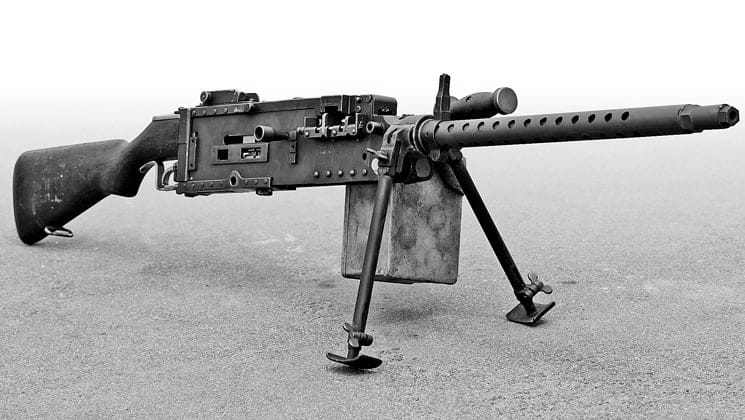
Now this doesn’t mean a formal standing army with a standardized supply chain won’t have an informal system. A glance though the military history books will show that men will find what. Often seen as ad-hoc field modifications, or as the military youtubers call them “Grunts and Crafts Projects”. A good example would be the M2 Stinger pictured below.
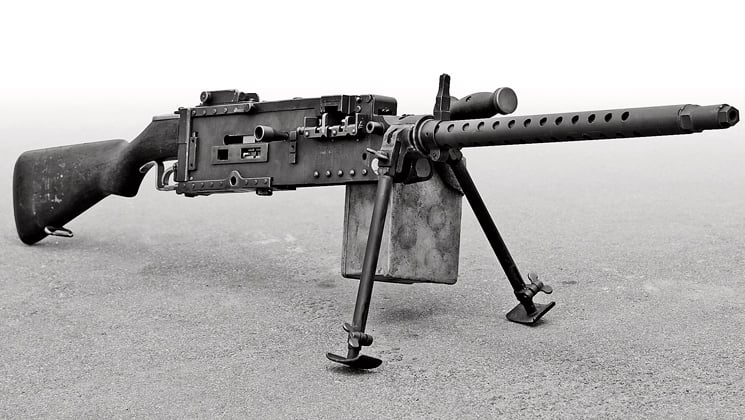
This franken gun is made by tanking the AN/M2, a version of the browning 1919 for aircraft use, attaching a M1 Garand stock to the back, making a trigger, and a BAR bipod. It was the child some bored marines who are stuck on a boat heading to Iwo Jima who knew they could use some more firepower. Now asking how did they get their hands on the parts and whatnot to build this is a question lost to history. If my enlisted friends are anything to go off of there was likely a bit of barter, bribery, theft and blackmail involved.
This secondary supply market where equipment gets shuffled around is something unavoidable. While it is possible it might not exist in some very well regimented and disciplined militaries I would call them exceptions rather than rules. There are story options for this informal supply option: Characterization. Depending on what non-standard stuff the character has we can learn about them. Did he trade his disserts for some extra grenades? Did his mother send him his lucky scarf that he wears despite it being out of regulation and the middle of summer? Does she trade away half the gear she gets because she’s issued both men’s and women’s sets and doesn’t need the gear for a 6ft 2 man, getting instead some more creature comforts.
This usage of the informal system should also be applied to informally supplied troops. Your average band of adventurers or misfits are the example of this. Why does the netrunner have the loudest gun in the group? Well because if he has to use it being quiet won’t matter anymore. The wizard with a sword certainly has his reasons for carrying it. Of course this gear selection is more a function of character than world. But knowing what is or isn’t an option and where these options come from is worldbulding. While it may seem pedantic to functionally stand in the way of “the character can do whatever they want”, necessity is the mother of invention and it’s only possible to think outside the box when you don’t know you’re in it. Moving on to my future, but near future planet let’s review what the infantry will be using, both in the main army and the home guard. At the end I’ll give some examples of how characters get around the supply limitations.
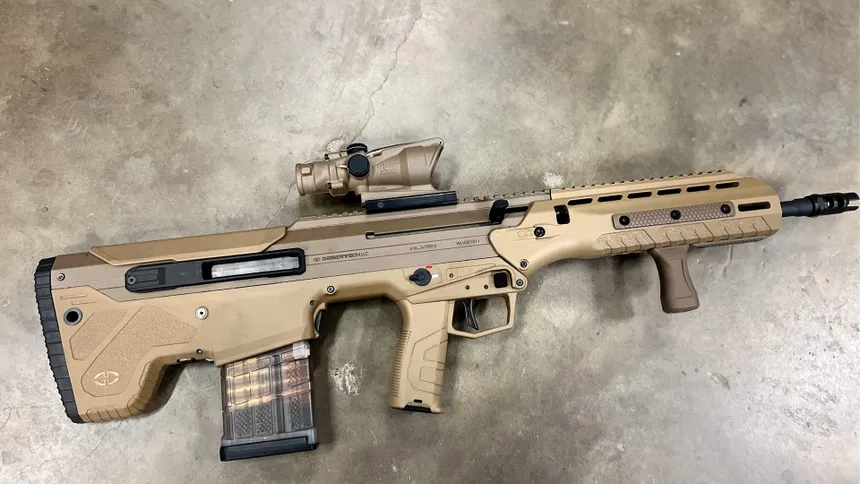
Both the army and home guard will use the same rifles. As simpler is better, at least when it comes to weaponry, good old firearms. Chemical kinetic if we want to be pedantic. I could go into firearms design and the pros and cons here, however I will leave that rats nest for a future week should it be desired. The important information will be bullpup rifles, with 20in barrels, .25 in caliber likely with 30 round magazines. If you don’t understand those firearm terms google it or demand that I do a firearm dive. The general machine gun (GMG) will be same round, fed from 100 round belts. This commonality will allow for one to supply the other, and there to be one group of parts, and training.
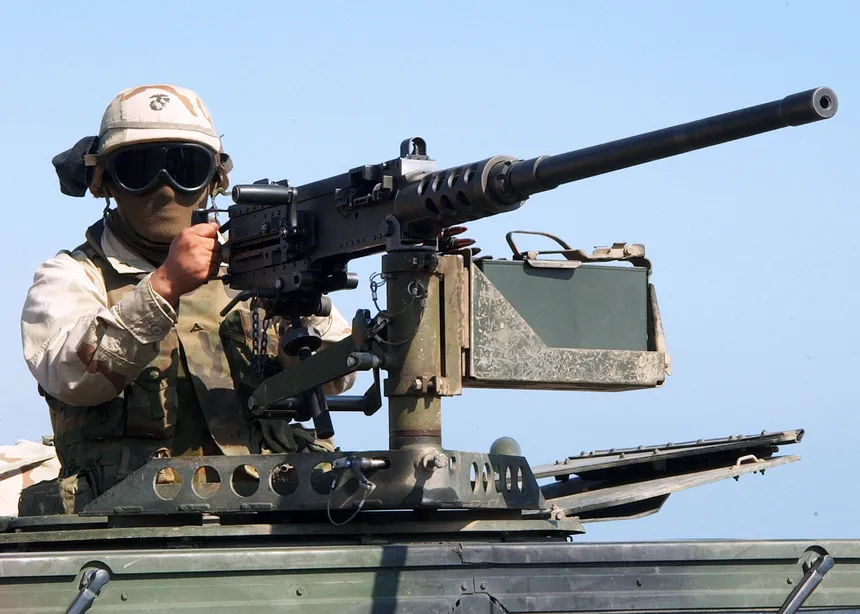
Likewise the support weapons will be shared. I am going to use M2 aka Ma Duce, as the heavy machine gun (HMG); because as the copy pasta goes. “I am a M2 Browning gunner stationed on Tatooine, deployed on convoy duty. Get ambushed and mow down rows of hostile combatants. Make my way back to base and look over my gun. See Tunis, Rome, Seoul, Saigon, Panama, Bagdad, Kabul, Grimaldi, Olympus Mons, Paxsi, etched into the receiver. Etch Tosche Station at the end of the list. Where will this old girl go next?” With the seeming immortality of the M2 and my selection of firearms I don’t see a reason to not use it. The other notable option would be the DShK or Dishka as we westerners call it, as it’s functionally the Russian equivalent and almost as old. However as I’m using inches it would be rather cringe to pick something designed in metric French.
For the light anti-tank I am thinking a launcher in the vein of the M72 LAW or RPG-18: light weight, 2.5 inch diameter, single shot. Something good enough to deal with bullet proof things. The heavier option would be reloadable, I’m thinking recoilless rifle along the lines of the Carl Gustaf, although I would expand it to a 3.5 in weapon from it’s 84mm. This reloadable option means one system can be used in anti-tank, anti-bunker, anti-infantry, smoke or illumination role depending on what rounds are carried by the specific units. Again one size fits most but we have budget and stockpiles to think about. For the properly heavy anti-tank a wire guided missile system mixed with the form factor and seekers of the FGM-148 Javelin. My thought behind wire guided is that it gives a way for the operator to do lock after launch, or steer the missile into a location should a lock not be possible. If the missile has a lock you can fire and forget. Sure that’s a bit more complex on the tech side but something needs to be properly futuristic in sci-fi now don’t it.
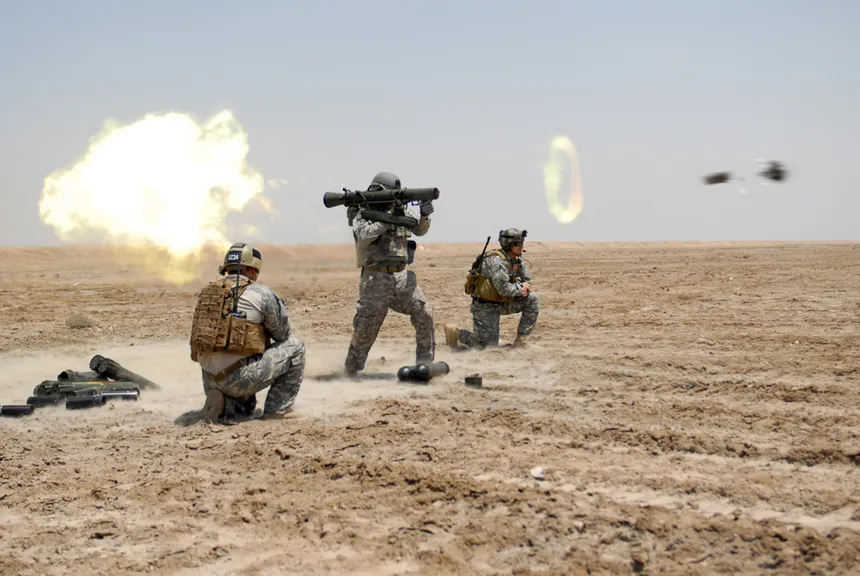
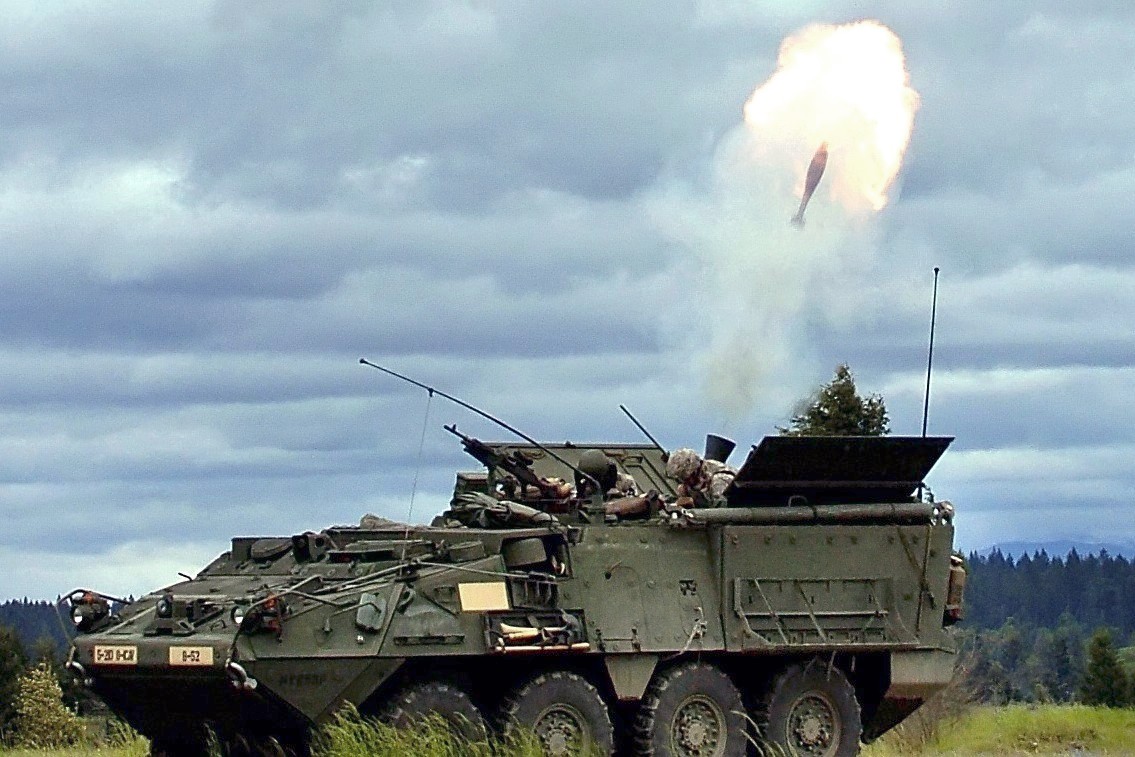
Lastly on the equipment side of the infantry we have a light mortar. I am thinking a 3 in mortar designed to be man portable. It would be the light mortar for the army and the main mortar for the home guard. Generally not that powerful, but it’s light weight, low training costs, and high rate of fire means they can be passed down the support train to the infantry platoons. A larger 5 in mortar would be the main mortar for the army and the heavy mortar for the home guard. While it will be man portable if needed, it usually won’t be. The mortar crew carrying their weapons in the back of a light truck or mounting them in larger ones.
Weapons done lets touch on the rest of the gear, as it’s common to think about weaponry for a military and ignore the rest of the stuff weather that is bullets, backpacks, bandages or bottes.
Since we are talking infantry, there are three major categories of gear that will finish out our infantrymen’s supply box: Armor, Tools and Auxiliary Weapons.
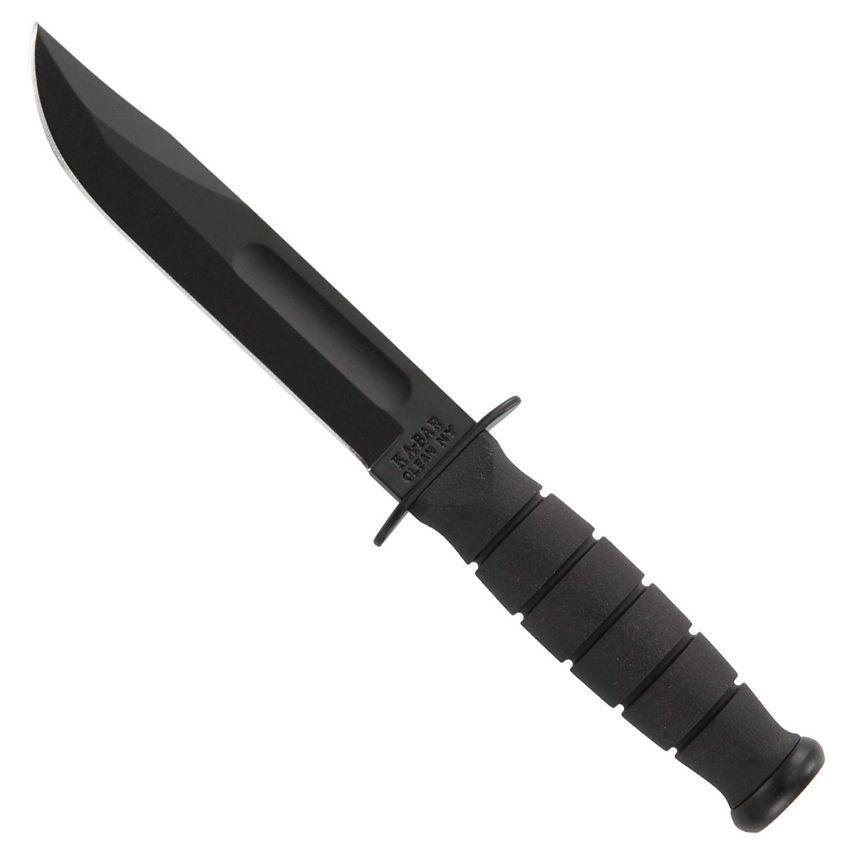
Starting with the auxiliary weapons these are things that won’t be issued or available to anyone with a radio this will largely consist of hand guns, grenades, and knives. The grenades will come with the modern standards, fragmentation, flashbang, and various colors of smoke. However there will also be EMP grenades as they will help deal with modern electronics, as there’s only so much shielding you can put on something man portable. Knives will likely be something similar to the good old KA-Bar because it's simple and it works.
Hand guns will be a bit more complicated, I like the larger bore handguns. However larger bore handguns lead to larger bullets which lead to either less of them or a larger handgun. Which isn’t always the most helpful in a combat situation. There is the other side which is to go smaller with say a round like 5.7mmx28mm or .22 TCM. this smaller round gives higher capacities or smaller weapons. Which is usually helpful in combat situations. However the smaller rounds tend to do less damage and the smaller pistols are harder to shoot, which makes it a wash. As I am an enjoyer of handcannons something in a .40 inch will be the standard issue.
Tools will also be a fairly unspecific group with things like entrenching tools, usually shovels, and pioneering tools, add axes both regular and pick to the shovels, to the mix. However as this is the future adding things like drones would be an obvious addition. However there are many more interesting engineering tools such as metal detectors since they are used in minesweeping are also not to be wholly overlooked.
Lastly we come to armor. Armor in sci-fi, and to a degree fantasy, comes in two streaks the standard stuff and ‘enhanced’. In science fiction this tends to be powered armor where as fantasy it’s magical enchantments. There will be a noticeable split here where the standing professional army will use lots of power armor, while the home guard will use something closer to today. The home guard are reservists after all. The power armor won’t be anything super special, more of a self supporting set of plate armor to give the man inside more protection and an easier time carrying around all the gear they will need on the future battlefields.
With that I’m off to work on some short stories. Will be posting previews and portions of them when they are ready. See you in a few weeks for the next Worldbuild Wednesday.