Stories of People
Most people don’t realize how much they show off or rely on their culture. Some say that trying to understand one’s own culture is like asking a fish if they would have a world for water. In all honesty it’s more about understanding the stories that are told and continuing to tell them. Rather than being a real meaningful philosophical argument.
I see many people creating cultures in their worlds incidentally. Yes I’m going to keep using that intentional, incidental, implicit, explicit Punnet Square from all those years ago. Cultures are the most complex part and one of the most important parts of the worldbuild. Yet when it comes to advice most worldbuilders end up lost, my previous advice included in that. Therefore this month I am going to go over what culture is and why it is important to a world, how one goes around constructing a culture, how a culture evolves, how to create counter cultures and sub cultures, and finally how to use culture to direct both worldbuilding and stories. As this is the first week the focus will be on constructing culture. Thus I will be tackling the questions: What is culture? Why is it so hard to build? and How does one document the cultures they create?
The issues start with the question: What is culture? The books will define it as “A set of shared beliefs, values, customs, behaviors, and artifacts that characterize a group or society.” While this is correct, there’s a lot of thick concepts that get compressed into words far to small for them, and as such ideas are repeated within the definition. A quick google will read one to a few different blogs of other worldbuilders talking about the issue, again there is a trend of conflating culture, customs, and traditions. Thus I will ask a question: What is your culture? Not what is a culture you’ve created, what is your culture? Write it down, take time if needed. It’s not like this post is going anywhere. Then, for those of you with notes on created cultures, compare and contrast. I would be willing to wager quite a bit that the average person will build culture one way and then describe their own in a completely different way.
I have seen worldbuliders proceed without any understanding of culture in their world. Neither philosophical or practical. These worlds often end up importing the culture of the creator, sometimes with the stereotypical traits one will see connected to the species, era, or location that the desired story will need to use. This is a very understandable conclusion, as culture is the hardest part of any worldbuild to get right. When done, it allows a world to stand on it’s own. When done well it enhances a world to the point where it becomes something that is truly memorable.
Thus I will propose my own workable definition to the term culture: Culture is the summation of a specific peoples’ history, stories, ideals, customs, traditions, and goals. This isn’t the best philosophical definition, and there are defiantly a lot of debates that can come from any definition of culture, mine included. I assert this is a good working definition especially when it comes to worldbuliding as it gives you what is needed to produce a more useful, and meaningful cultures that can be used to great effect. This comes from the parts of the definition. History is what has happened to the people, this should be the facts with dates who did what when. Stories should be a mix of folklore, mythology, and fiction; their focus should be on creating a shared story and a shared identity though those shared stories. Ideals grow from the stories and history, in short this should be how the people think about the world and how they approach it. Customs are the rituals one does day in day out that hold character but no history. Traditions are customs with history, and ideally a reason for their creation long forgotten. Goals is the most volatile as the culture completes them and then creates new goals for the culture. Often a culture will have multiple goals at once. By building out these different aspects one will have a way to answer most questions about the culture.
Some will say that their framework is better, while debates can be made it comes down to how well can you turn the idea or concept into something that can be worked on and with. Hence why the working definition is a working definition. A more philosophical or more true to life definition may be better for conversation; worldbuilding is seldomly conversation.
Culture is hard to build because culture is large and often ill-defined. It is hard to get around the large portion of this problem. Cultures are often things that are massive, omnipresent, and ethereal. One can’t see or directly interact with the culture of a place, and often it becomes invisible for those who live within it. Meaning without either moving into a new culture, or otherwise coming into close contact with another culture, one seldom has to ask the hard questions about culture nor would one have much to contrast to when it comes to culture. Which leads to a lack of baseline problem. This is why so many fictional staples end up running into the same tropes and cultures despite the writers and characters ending up diverging from the expected archetype.
My answer to the ill-defined issue is the working definition presented above. That doesn’t make the whole system of developing a culture any easier. Each one of my five points that get added together to create a culture might be a lifetime of work, if not more, on their own. Thus the difficulty shifts from not having a direction to having too much to do in any part of the direction. As every part of the five need to be woven together to make the whole that is the culture, and ideally the whole is greater than the sum of it’s parts. Meaning each portion of the equation needs to connect to each other. The history needs to breed traditions which have stories behind them and inspire customs that will work towards the current goal. Meaning moderation and understanding of what will be important sooner becomes the most important skill.
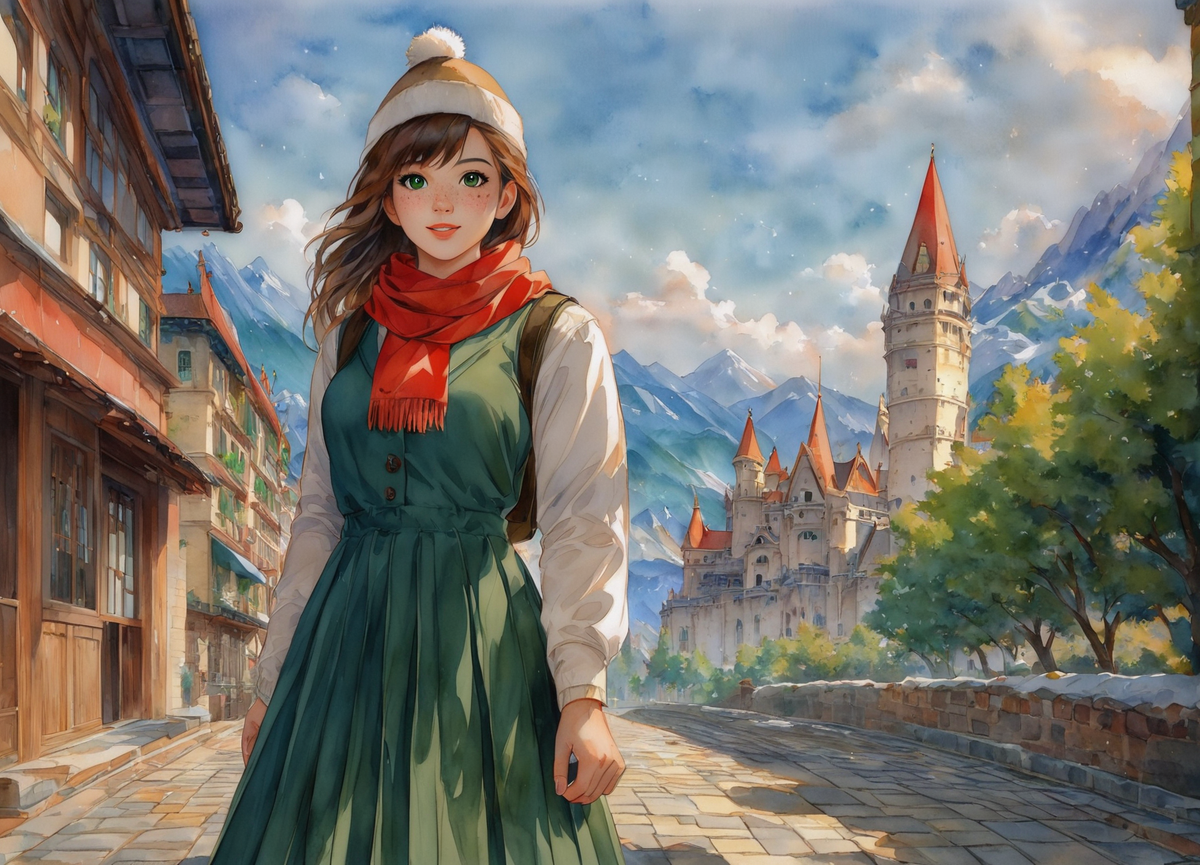
While working on this I started to sketch out a short story that would take place in a small kingdom high up the mountains. Somewhere near the treeline with steep slopes. They would have greenery in the summer and snow in the winter. The question is what culture would lead to people moving that high up the mountains and what would develop up there? While I’d only need a few customs, a story, pair of ideals, maybe a saying or two for the short story yet it makes for an interesting case that one can start in the middle rather than trying to go from the beginning.
Lastly we come to documentation of a culture. This is a very tricky thing, as anthropology is in essence the field of doing just that. Thus there is some things to be learned from how they take notes, and there is a format I have adapted from reading some journals and more final papers. The goal is to get enough information to keep it for future use, and understand how things put together, without overloading on details. Each worldbuilder will have their own balance thus as usual, I trust you to adapt what it is I suggest here for your own process.
The first thing to do is realize that story and history will need to be thought about as semi-separate entities to culture itself. Thus I treat them very similarly, as both blur the lines between cultural artifact and not cultural artifact. Meaning that for both the major cultural touch points should be duplicated into the cultural section of the notebook, should it be separate from the history or story portion of the notebook. Likewise anything mentioned in the cultural portion isn’t something that needs to be elaborated on in full. More importantly when working with history and stories knowing what they mean to the culture is where the power comes from. Thus one can create a character and the sketch for a cast of a TV show without having to go and write hundreds of episodes of Loony Toons, or Ricky Rat. My notebook would transcribe like this:
The third battle of Scalvran Pass:
This battle was the last stand of the house of Zolran against the forces of the Four Crowns. They were able to hold off as their allies from the far side of the pass, the Tlarlans rode to rescue them and prevent the Four Crowns from gaining access across the pass.
The Zolrans see this as both one of their greatest moments and worst defeats. The debt they believe they incurred to the Tlarlans weighs on their minds, as since those days war has yet to return to the pass.
- Zolrans have statues of their prince, and general in the settlement near the old fort. They also have another statue of the Tlarlan general with riders to honor those who came to their defense.
- Most Zolrans don’t know the first or second battle of Scalvran pass, even though they have more heroics including rescuing a Tlarlan princess from one of the kingdoms that would from the Four Crowns.
- Most people know one of the dramatized versions of the event that play up the drama, mix up some facts, and add characters. Yet the core of the story is kept, and it is how the battle continues to stay relevant.
Ideals should be purely cultural objects, meaning where as history and stories can be referenced in culture, ideals should be referenced elsewhere. This means the notes should be more detailed. Yet when it comes to defining an ideal it should focus on, well, the ideals of the culture: what do they old in high regards, what do they see as aspirational, what do they strive for? I know for those with a thesaurus will point out those are all functionally similar. I will insist as these variations on the question, what are the ideals of a culture, often find ways to uncover better answers and helps in clarifying this portion of the culture. The more concrete these can be the better the end result will be, yet keep them focused. My notebooks look like this:
Zolrani culture wants to keep their way of life without getting stuck in their ways. Remembering the past is important however worshiping it must be avoided. Honor is something to be gained not for just oneself but also one’s family. Providing for the wider community is to be strived for, however not at the cost of oneself or one’s loved ones.
Customs and traditions can be treated like story and history. They are two different categories, yet they are rituals simply formed in different ways and with different amounts of cultural weight. For those who have followed along since the start of the year thinking of them in the same vein as the rituals of romance from February and the weight of the tradition is in the same vein of the weight of a festival. There are differences, as cultural traditions may be ceremonies or festivals or something more incidental. Customs also fallow different rules that mean they may affect any number of people with any number involved. Meaning they are looser to define and yet often more commonly used on average due to their commonality across the culture. I record them like this:
The Zolrani have three types of greetings. One for peers, one for crossing rank, and one for family. The greetings are meant to provide acknowledgment to the station and show one’s understanding of it. This is lifted for family, however using the family greeting inappropriately is one of the more major blunders one can make.
The Zolrani carry arms, this dates back to the many, many times they have had to defend their home from both invaders and wildlife. Men it is an obligation, women it is tolerated if she is unwed or unescorted.
Finally we reach goals, these aren’t personal goals however they can become the basis for personal goals. These goals should be where the culture wants to go; what the culture wants to improve. How these goals get set is almost as important as what the goals are. Meaning any section on cultural goals should start how these goals get set. Is it public opinion, the whims of a monarch, the press or something else that controls how goals are set. Across history there are some times that are clear: JFK declaring that the US will put a man on the moon and bring him back by the end of the decade being one of the most obvious and very clean cut. Yet it can be more muddled, like wanting to improve worker safety or decrease child mortality where there are many leaders all working in different ways to improve the issue. These goals will become most useful when working to evolve a culture though out the ages. Although I get ahead of myself, I keep my goal notes as the following:
The Zolrani are looking to find a way to find themselves at ease in their homeland. Between the wild animals and aggressive neighbors they have been unable to relax at any point in their history. They want to improve the security of their lands. The King has been pushing for economic reforms to improve the industrialization of their lands to better make use of the minerals the mountain provides.
As has been said before these are all stubs to prove the framework. A suggestion to work from not a hard rule to be copied mindlessly. Some worldbuilders will run better with a looser framework, others will need something more formalized. Find what works and keep it consistent so that one can work the process and make it easier as time goes on.
That all said I hope you will join me for the rest of the exploration of culture. It will be a topic that will become foundational going forward thus I need to cover it. Which makes this week the bones of the bones that will be built from this month. We touched on why cultures are important for worlds, a bit of the reasoning on why they are so complicated to build and how I go about framing them. Its the bones, its a start and next week I will be back with how to use those the goals to evolve a culture over time.
If you want the rest of this post and all future posts sent to your inbox sign up now. I hope to see you soon. This week's weekend post will be Fantasy Friday where I'll be going over how the mono-culture fantasy race isn't as bad as many suggest. Subscribe to get it and every weekend post in full.