
After the Vows
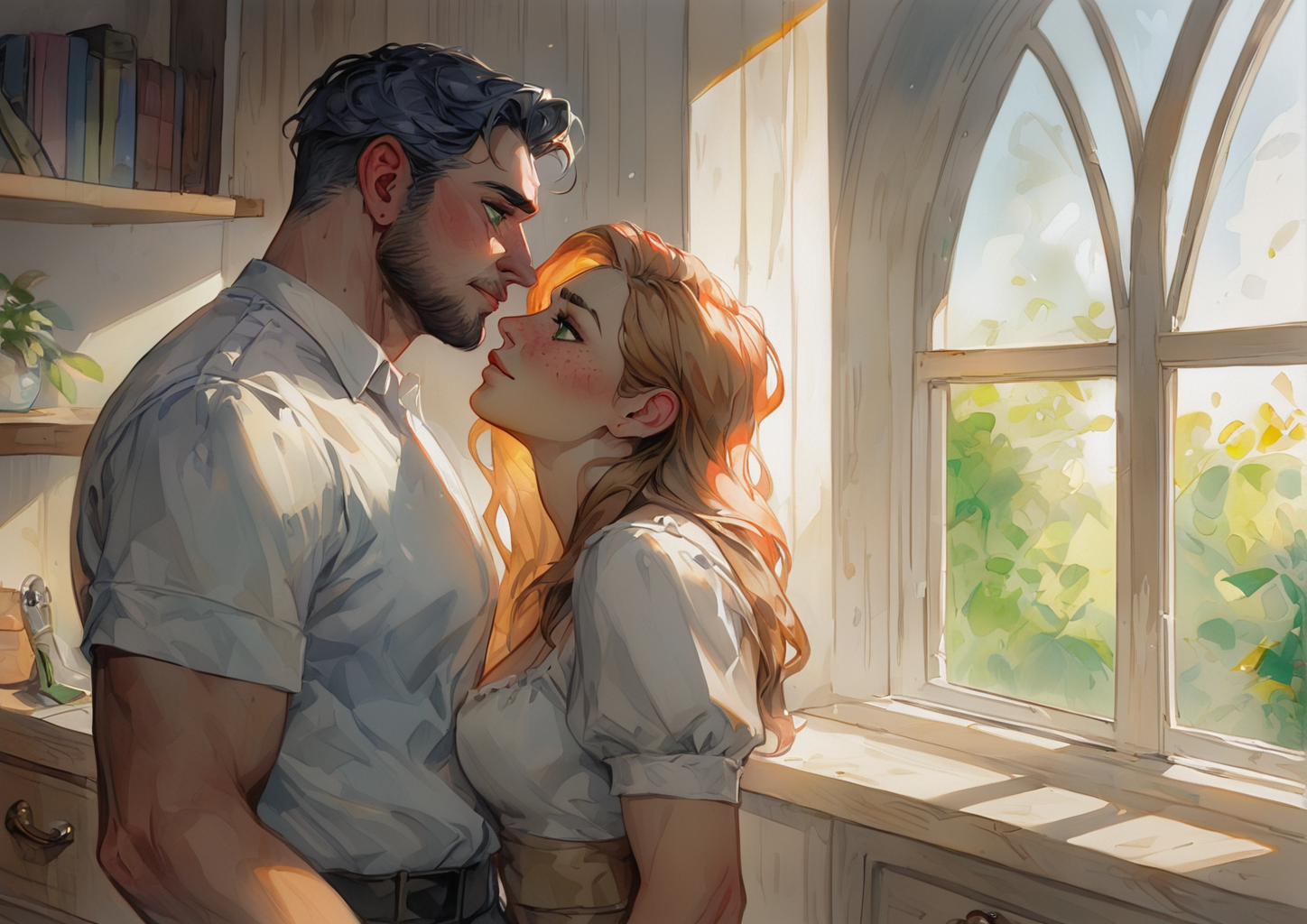
Marriage is often sold as the end of romance, which is why I see so many have issues. Instead think of it as the beginning of the next phase of romance. Now that the bond has been forged it can be put to work for the pairing and the community.
Rounding out our theme of romance and relationships is the topic of legacy. Legacy is one of the more powerful things that comes from any relationship, romance or otherwise. Romance however brings with it the goal of children and that becomes a very powerful tool to build and shape a legacy. This is where communities tend to take center stage over the couples. Often the duo starts being treated as a single societal unit, sometimes called the family unit. None of this means the game is over. Often it continues with new goals and a new rule set. This change is seldom unnoticed, and often highlights how romance translates into the building block of culture, even if stories tend to gloss over it with happily ever after. Today we are cutting though the gloss and exploring what happens after the vows.
First we have to define what happens when we reach the end of the romance or if we can reach the end of romance, and define what happens next. Defining the end of the romance is usually centered on the breakup, as the drama makes for good story. Yet if things go well what does that mean? There are two directions, replacement and evolution and good arguments for both. On the argument for ending the romance it makes for a cleaner notebook, and cultural understanding of romance and married. Thus the relationship will change, but the bigger change will be how the culture treats the couple. They’ve completed their trials of romance and now reap the rewards of that completion. By transferring from one stage to another it’s likely that those clamps we talked about during the second week will be applied to keep the married couple together. As if the marriages, or whatever term one wishes to apply to the completed romances, fall apart often the rewards may not seem as rewarding for those entering into romance. On the argument for evolving the romance into a new stage it tends to be messier both in the notebook and in execution. Generally this isn’t a clean process, while there may be a ceremony that signals this transition, it often takes longer time than just a ceremony. As this is an evolution, the end goal should be fairly well defined; keep the path there fairly wide and nebulous as there is story to be found while the couple works their way though the evolution. A good analogy would be the coming of age story applied to the relationship. It starts in one state, will go though trials and then end up in a stronger secondary state.
Regardless of which way one chooses to move the romance into the ‘win state’; there needs to be enough between the romance and the post-romance to ensure they feel different. If they aren’t different enough than it won’t feel like a separate phase, making the transition feel pointless and it will be removed or replaced.
What comes after the romance is as important of can we really reach the end of the romance, and how getting here works. The most obvious is children, once romance finishes families are formed and children are born. Yet often there is more to a legacy than just children. How each culture defines legacy will be embedded in the post romance state. Often this is tied to children and what parents pass do their children. It doesn’t have to be. Legacy as a concept is what is left behind. Meaning that, to wax a bit philosophically, whatever happens after the romance is the romance’s legacy. What a culture wishes for couples to leave behind will be what they ask of the couples. As I mentioned, generally this is children. Yet the worldbuilder has a blank canvas. Think about out what it is that a culture values and how it would want to preserve it, as that will be what it promotes for couples to create and to pass down.
This is one of the most powerful leavers one has over culture, and one of the best ways to show off a culture. As a culture’s definition and promotion of legacy is how it remembers itself. It flows from successful romances and thus is the second big linkage that binds romance and culture. Regardless if there is a nice end to romance or a messy evolution, culture will push the couple into deciding their legacy. There is another choice to make when it comes to the actions of the culture. It can either mirror, or complement the way it acts with the couples. If it mirrors, then the pressure and meddling that society put on the couple though the moderators will continue. It will shift from trying to form a strong couple to getting the couple to form their legacy. In cultures when they complement there is a degree of trust given to the couple after they finish their romance. This trust is often hard earned and the freedom is something cherished by the culture.
Often one can ignore how the details get decided, provided they understand the culture will do what it can to put the couple to work. Because romance is a tool to form stronger couples, stronger families, that strength needs to do something. The legacy the culture wants the couples to create, will be guided by the same agents that worked to intervene during the romance.
When it comes to the characters, things can get even more potent. The first thing to think about how do the two players approach this change. Often with the change there are new titles get applied to the players in the standard case: husband, and wife. Answering the question: How do the couple adapt to their new roles?
Generally this is where the gender roles develop within a society, as men and women transfer to husbands and wives. Their goal shifts to creating a legacy, again often though children, and ensuring that their mark is left. The biggest shift is that the game is now co-op. The two have built their relationship and often now become a single unit within society. This means their actions are now affecting more than themselves, children or other forms of legacy amplify this as well. How much pressure and presence it applies to the individuals will depend on the culture in question. If the culture enforces larger units, perhaps extended families or clans that will imply more pressure on the couple. The converse is also true, if the culture operates on smaller units it may be possible that the only presence comes from the spouse.
Creating the standard ‘attitudes’ or takes from this transition and the changing pressures is something that will be valuable. Do men complain about how, “I’d love to man; I gotta take care of the wife.” while using her as an excuse to get out of carrying a refrigerator up several flights of stairs. Do women go out of their way to show off their husband and children? Are there now measures the couple and the family that comes from it need to think about. Knowing what the bounds are for acceptable and unacceptable answers for those questions. When one goes outside of the bounds things tend to end up being enforced very quickly, and often very strongly. Meaning that pairs that end up out of bounds may end up outside of the culture, and thus society.
How punishing the rules are for 'bonded pairs', to use the academic terms, will often influence how present the wider culture is in their lives. More punishing more present, If this becomes oppressive is down to the worldbuilder in question.
Using all this in stories is rather tricky. Legacy is one of the most powerful motivators one can have, it can also be one of the most potent crisis for a character to run into. If one suddenly inherits their parent’s legacy unexpectedly that can become quite the plot hook. It can connect a character to their family, and their culture, it can also put a lot of weight on the character’s shoulders. For those wanting to tell stories about what happens to the couple after the honeymoon the weight of expectations can weigh down on the characters and make their decisions.Thus the post romance should be the force behind the forces. Seldom should it be called out in pain view, the sole exception being when those forces are the ones moving the plot.
To put this into the notebook I would break it into two halves. What the goals of society are for the couple, what should the couple be doing to form a legacy, and how does that impact the characters.
Societal Goals: Family units are to have children and create new family units, passing along knowledge and understanding of the workings of the civilization.
How a Couple builds a Legacy: There are two main ways, children and forming an institution. That institution should be something a family can manage, improve the community, provide for the family and be passed down to the children.
Men:
- Provide for their wives and children.
- Decide what the family’s legacy will be.
Women:
- Bear and raise the children.
- Ensure the family’s legacy is useful to the community.
This is an overview of what the cultural and societal tier would look like. However as with most things in this topic there will be a character layer This is an overview of what the cultural and societal tier would look like. However as with most things in this topic there will be a character layer where we look into a couple specifically we will go back to our thumbnail couple of Claire and Michael. We will start with how they view their future responsibilities.
Claire:
Claire knows she will have to take over her family’s farm. She knows it isn’t really her role in society, yet being the eldest and there being no son it is her job to take over the farm. Meaning that while that burden hasn’t fallen on her yet. She knows it will be called to do it eventually. Her personal goals to be a vet is less important than ensuring her family’s farm continues, hence her personal goal to find a husband who will take it over.
Michael:
Michael is a man with out much direction, the middle brother he has little options back home. He wants to do and leave something meaningful and that will genuinely help people. He knows how to learn and is willing to create or integrate with another’s legacy. Meaning he is more worried about finding a way to leave a mark than he is with what that mark it will be.
For most this would be something that gets blocked out in the ‘pre-romance’ phase. However as these thoughts make for good contrast I’m putting them here. To make that contrast we will view their goals both combined and separate, starting with the combined:
The couple wants to take over the farm Claire grew up on and keep it a productive independent farm. They want to modernize it to make it more effective and productive while keeping it away from the more destructive corporations out there.
Michael:
Michael wants to leave his mark on the farm he married into. He knows he’s in over his head, yet learning will keep food on the table and his family happy. Thus he will do what he can to improve the farm with the family he has married into.
Claire:
Claire wants to ensure that Michael either changes paths or adapts to farm life. She is learning just how much her mother did to run the farm. She’s looking forward to children and teaching them how to run the farm.
Again these are stubs for what one would want to write for their own works. I will leave expanding them to the reader.
With that I will bring this month to a close. Legacy and what happens after the romance is one of the things that can shape not only characters but also the world. It produces plots, builds history and ultimately culture. From beginning of romance to the end of the game there are many stories found with in the theme. The world may take the passion and emotion and replace it with rules and systems that play into the rest of the culture and the world. Culture that we will be looking into next month.
Share this story
If you want to get this and every article from the Gazette sent to your in box you can subscribe below. I hope to see you soon.